Skip to content
TRP

TRP Newsroom / Main Feed

New Opioids Move Unevenly

64

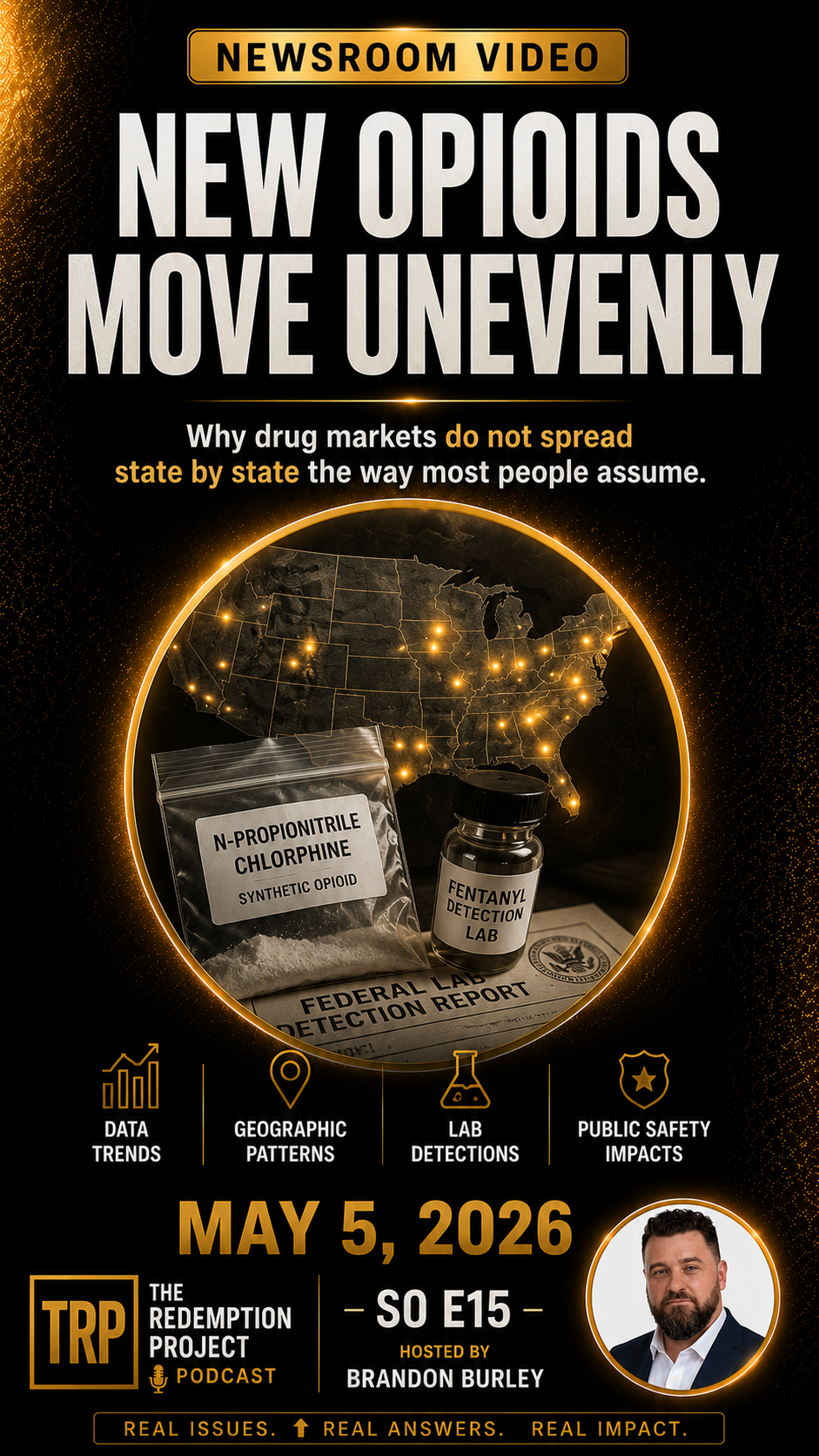
by Brandon Burley and The Redemption Project Federal detections of a new synthetic opioid show why drug markets do not spread state by state the way most people assume. Federal laboratory detections of a new synthetic opioid known as N-propionitrile chlorphine are raising broader questions about how emerging drug compounds move through U.S. supply networks. The compound was first confirmed by a DEA laboratory in 2024, with later detections reported in states including Texas, California, Illinois, Missouri, and Tennessee. New Mexico reports no confirmed identifications to date. State officials say the compound has not been detected in seized materials there, but that existing laboratory workflows would be capable of identifying it if it appeared. Forensic experts note that synthetic opioids do not spread state by state in a predictable pattern. They move through trafficking networks, wholesale relationships, and supply hubs, often appearing in one region while remaining absent in nearby states. That means the more important question is not whether a compound has reached a state yet. It is whether surveillance systems are prepared to recognize it when it does. Drug markets often follow relationships, logistics, and supply chains rather than geography. A compound may surface repeatedly in one region while remaining absent nearby for months or longer. That is why laboratory readiness often matters more than assumptions based on maps. I am a retired detective and criminal justice / government educator based in Tennessee. I am a commentary write for Tennessee Lookout and a weekly columnist with Knox TN Today . My work examines public policy, public safety systems and civic responsibility. My reporting and commentary have also appeared in Governing , The Arizona Capitol Times , South Florida Sun Sentinel , Police1 , among other state and regional outlets. Get full access to The Redemption Project Newsroom at newsroom.theredemptionproject.news/subscribe

New Opioids Move Unevenly

Related Episodes

Systems Explained

You Can’t Remove Incentives and Expect Compliance

This segment explores why incentives matter in criminal justice and reentry systems.Compliance does not happen in a vacuum. When individuals are given no incentives for positive behavior, accountability systems often fail.We discuss how structured incentives encourage responsibility, reduce violations, and support long-term success while still maintaining supervision and consequences.The Redemption Project focuses on realistic approaches to accountability and behavior change. Get full access to The Redemption Project Newsroom at newsroom.theredemptionproject.news/subscribe

18

Stories of Good Work

Reentry & Redemption in Our Community

Knoxville is quietly building a reentry ecosystem that many communities wish they had—connecting mentorship, recovery programs, stable housing, and community support in ways that improve public safety and reduce repeat arrests.In this read-aloud video, I share key points from my article originally published in Knox TN Today, explaining how sustained accountability, long-term mentorship, and community-rooted recovery efforts are strengthening lives after incarceration in Knoxville.Topics covered in this conversation include:• Men of Valor’s year-long aftercare housing and accountability model • The Knox County Church Network and its role in community support • ReNew Clinic’s long-term recovery focus • RISE mentoring for individuals and families facing instability • All4Knox and early intervention strategiesThese local initiatives show that redemption is not just a moral idea; it is a public-safety strategy proven to work when supported.This story is shared as part of The Redemption Project.Original article: https://www.knoxtntoday.com/knoxville-is-quietly-rebuilding-lives-and-its-time-we-paid-attention/ Get full access to The Redemption Project Newsroom at newsroom.theredemptionproject.news/subscribe

52

Systems Explained

Criminal Justice Is Tested After Release

by Brandon Burley and The Redemption Project Sentencing may dominate debate, but many of the most important public safety outcomes begin after someone returns to the community. We still measure criminal justice at the wrong moment. Most public debate focuses on sentencing, incarceration levels, and whether punishment sounds tough enough. But the most important question usually begins after someone leaves prison or jail. That is because most people who are incarcerated will eventually return to their communities, and the first year after release is often the most unstable part of the entire process. Housing problems, unemployment, untreated addiction, and weak supervision can all collide at once. When that happens, repeat offending often begins long before the next arrest ever appears in public statistics. That is why criminal justice is not really tested in the courtroom. It is tested after release, when structure becomes thinner and risk becomes real. Many policies are debated at sentencing. But outcomes are often decided later, when someone returns to unstable conditions and systems become less structured. That is where public safety either holds or begins to weaken again. I am a retired detective and criminal justice / government educator based in Tennessee. I am a commentary write for Tennessee Lookout and a weekly columnist with Knox TN Today . My work examines public policy, public safety systems and civic responsibility. My reporting and commentary have also appeared in Governing , The Arizona Capitol Times , South Florida Sun Sentinel , Police1 , among other state and regional outlets. Get full access to The Redemption Project Newsroom at newsroom.theredemptionproject.news/subscribe

52