This segment explores why incentives matter in criminal justice and reentry systems.Compliance does not happen in a vacuum. When individuals are given no incentives for positive behavior, accountability systems often fail.We discuss how structured incentives encourage responsibility, reduce violations, and support long-term success while still maintaining supervision and consequences.The Redemption Project focuses on realistic approaches to accountability and behavior change. Get full access to The Redemption Project Newsroom at newsroom.theredemptionproject.news/subscribe
Knoxville is quietly building a reentry ecosystem that many communities wish they had—connecting mentorship, recovery programs, stable housing, and community support in ways that improve public safety and reduce repeat arrests.In this read-aloud video, I share key points from my article originally published in Knox TN Today, explaining how sustained accountability, long-term mentorship, and community-rooted recovery efforts are strengthening lives after incarceration in Knoxville.Topics covered in this conversation include:• Men of Valor’s year-long aftercare housing and accountability model • The Knox County Church Network and its role in community support • ReNew Clinic’s long-term recovery focus • RISE mentoring for individuals and families facing instability • All4Knox and early intervention strategiesThese local initiatives show that redemption is not just a moral idea; it is a public-safety strategy proven to work when supported.This story is shared as part of The Redemption Project.Original article: https://www.knoxtntoday.com/knoxville-is-quietly-rebuilding-lives-and-its-time-we-paid-attention/ Get full access to The Redemption Project Newsroom at newsroom.theredemptionproject.news/subscribe

by Brandon Burley and The Redemption Project Sentencing may dominate debate, but many of the most important public safety outcomes begin after someone returns to the community. We still measure criminal justice at the wrong moment. Most public debate focuses on sentencing, incarceration levels, and whether punishment sounds tough enough. But the most important question usually begins after someone leaves prison or jail. That is because most people who are incarcerated will eventually return to their communities, and the first year after release is often the most unstable part of the entire process. Housing problems, unemployment, untreated addiction, and weak supervision can all collide at once. When that happens, repeat offending often begins long before the next arrest ever appears in public statistics. That is why criminal justice is not really tested in the courtroom. It is tested after release, when structure becomes thinner and risk becomes real. Many policies are debated at sentencing. But outcomes are often decided later, when someone returns to unstable conditions and systems become less structured. That is where public safety either holds or begins to weaken again. I am a retired detective and criminal justice / government educator based in Tennessee. I am a commentary write for Tennessee Lookout and a weekly columnist with Knox TN Today . My work examines public policy, public safety systems and civic responsibility. My reporting and commentary have also appeared in Governing , The Arizona Capitol Times , South Florida Sun Sentinel , Police1 , among other state and regional outlets. Get full access to The Redemption Project Newsroom at newsroom.theredemptionproject.news/subscribe
Thank you to everyone who tuned into my live video! Join me for my next live video in the app. I am a retired detective and criminal justice / government educator based in Tennessee. I am a commentary write for Tennessee Lookout and a weekly columnist with Knox TN Today . My work examines public policy, public safety systems and civic responsibility. My reporting and commentary have also appeared in Governing , The Arizona Capitol Times , South Florida Sun Sentinel , Police1 , among other state and regional outlets. Get full access to The Redemption Project Newsroom at newsroom.theredemptionproject.news/subscribe
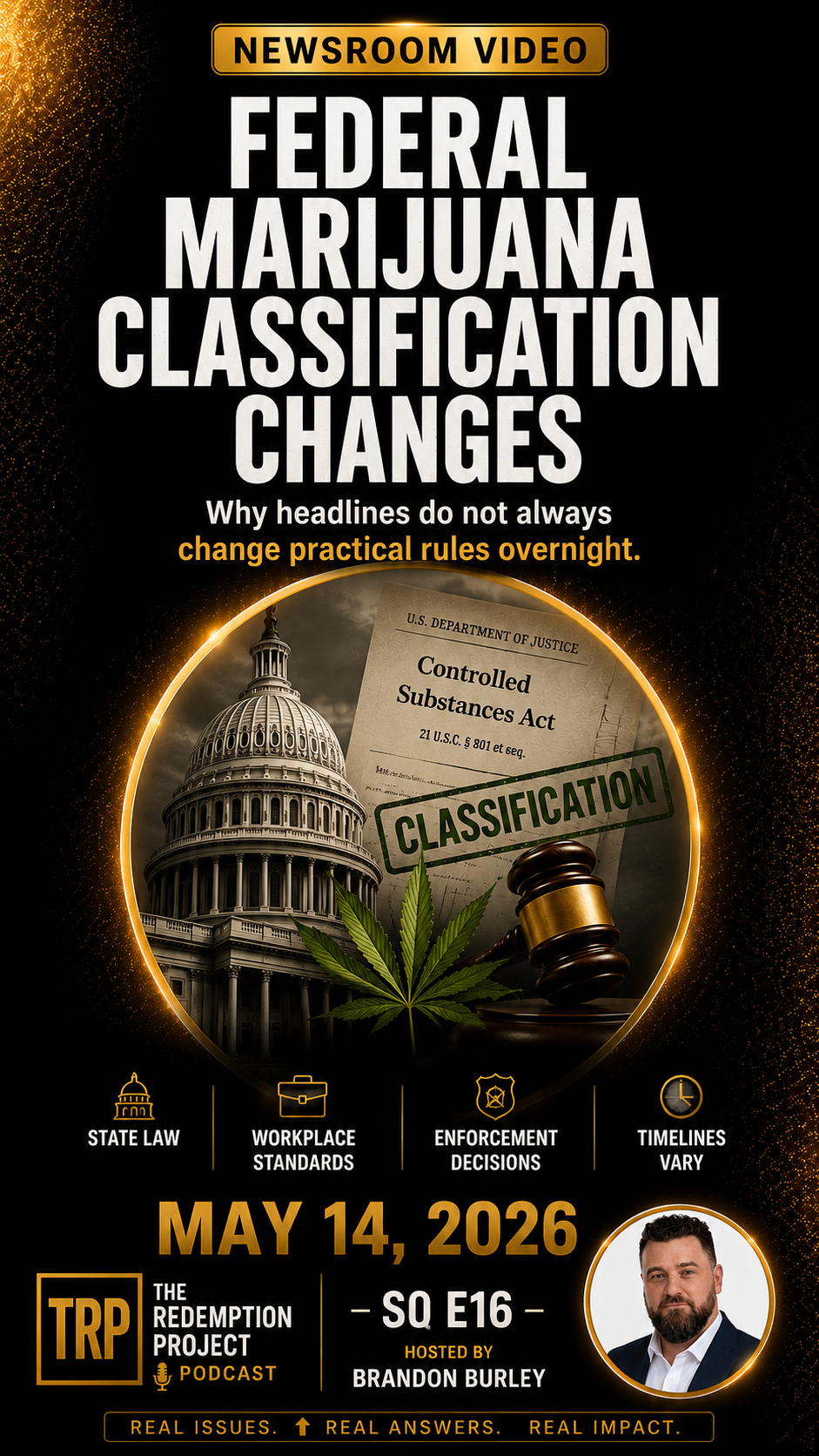
by Brandon Burley and The Redemption Project When federal marijuana classification changes, many people assume practical rules shift immediately. In reality, state law, workplace standards, and enforcement decisions often continue operating under separate timelines for much longer than headlines suggest. I am a retired detective and criminal justice / government educator based in Tennessee. I am a commentary write for Tennessee Lookout and a weekly columnist with Knox TN Today . My work examines public policy, public safety systems and civic responsibility. My reporting and commentary have also appeared in Governing , The Arizona Capitol Times , South Florida Sun Sentinel , Police1 , among other state and regional outlets. Get full access to The Redemption Project Newsroom at newsroom.theredemptionproject.news/subscribe
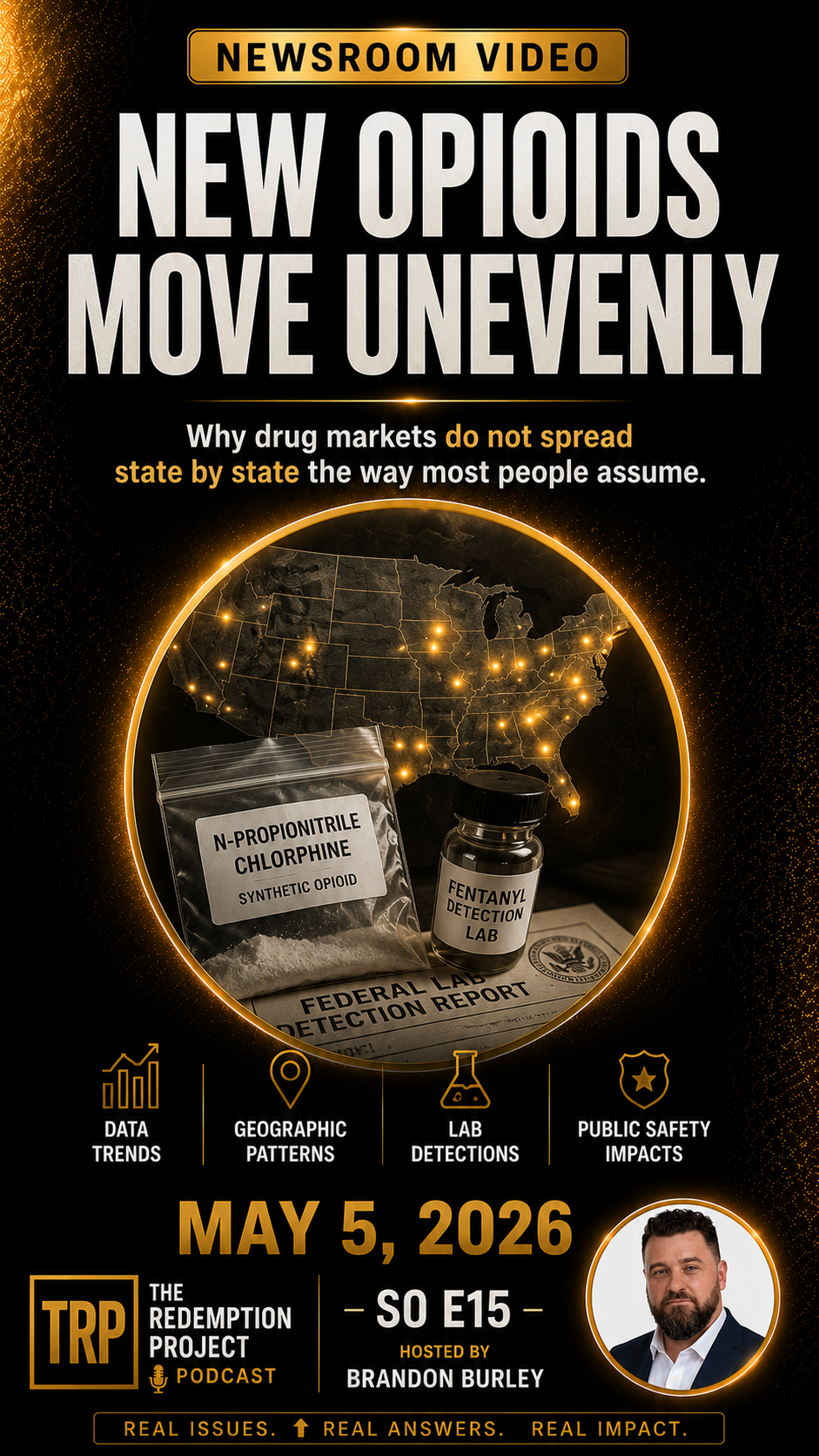
by Brandon Burley and The Redemption Project Federal detections of a new synthetic opioid show why drug markets do not spread state by state the way most people assume. Federal laboratory detections of a new synthetic opioid known as N-propionitrile chlorphine are raising broader questions about how emerging drug compounds move through U.S. supply networks. The compound was first confirmed by a DEA laboratory in 2024, with later detections reported in states including Texas, California, Illinois, Missouri, and Tennessee. New Mexico reports no confirmed identifications to date. State officials say the compound has not been detected in seized materials there, but that existing laboratory workflows would be capable of identifying it if it appeared. Forensic experts note that synthetic opioids do not spread state by state in a predictable pattern. They move through trafficking networks, wholesale relationships, and supply hubs, often appearing in one region while remaining absent in nearby states. That means the more important question is not whether a compound has reached a state yet. It is whether surveillance systems are prepared to recognize it when it does. Drug markets often follow relationships, logistics, and supply chains rather than geography. A compound may surface repeatedly in one region while remaining absent nearby for months or longer. That is why laboratory readiness often matters more than assumptions based on maps. I am a retired detective and criminal justice / government educator based in Tennessee. I am a commentary write for Tennessee Lookout and a weekly columnist with Knox TN Today . My work examines public policy, public safety systems and civic responsibility. My reporting and commentary have also appeared in Governing , The Arizona Capitol Times , South Florida Sun Sentinel , Police1 , among other state and regional outlets. Get full access to The Redemption Project Newsroom at newsroom.theredemptionproject.news/subscribe
by Brandon Burley and The Redemption Project A call may close operationally and still remain mentally active much longer than people realize. That is part of why officer wellness is often misunderstood: many burdens do not appear when the report is written. I am a retired detective and criminal justice / government educator based in Tennessee. I am a commentary write for Tennessee Lookout and a weekly columnist with Knox TN Today . My work examines public policy, public safety systems and civic responsibility. My reporting and commentary have also appeared in Governing , The Arizona Capitol Times , South Florida Sun Sentinel , Police1 , among other state and regional outlets. Get full access to The Redemption Project Newsroom at newsroom.theredemptionproject.news/subscribe
by Brandon Burley and The Redemption Project Human trafficking indicators do not always surface first where people expect. Sometimes they appear where trust forms naturally and people spend enough time for unusual patterns to become visible. I am a retired detective and criminal justice / government educator based in Tennessee. I am a commentary write for Tennessee Lookout and a weekly columnist with Knox TN Today . My work examines public policy, public safety systems and civic responsibility. My reporting and commentary have also appeared in Governing , The Arizona Capitol Times , South Florida Sun Sentinel , Police1 , among other state and regional outlets. Get full access to The Redemption Project Newsroom at newsroom.theredemptionproject.news/subscribe
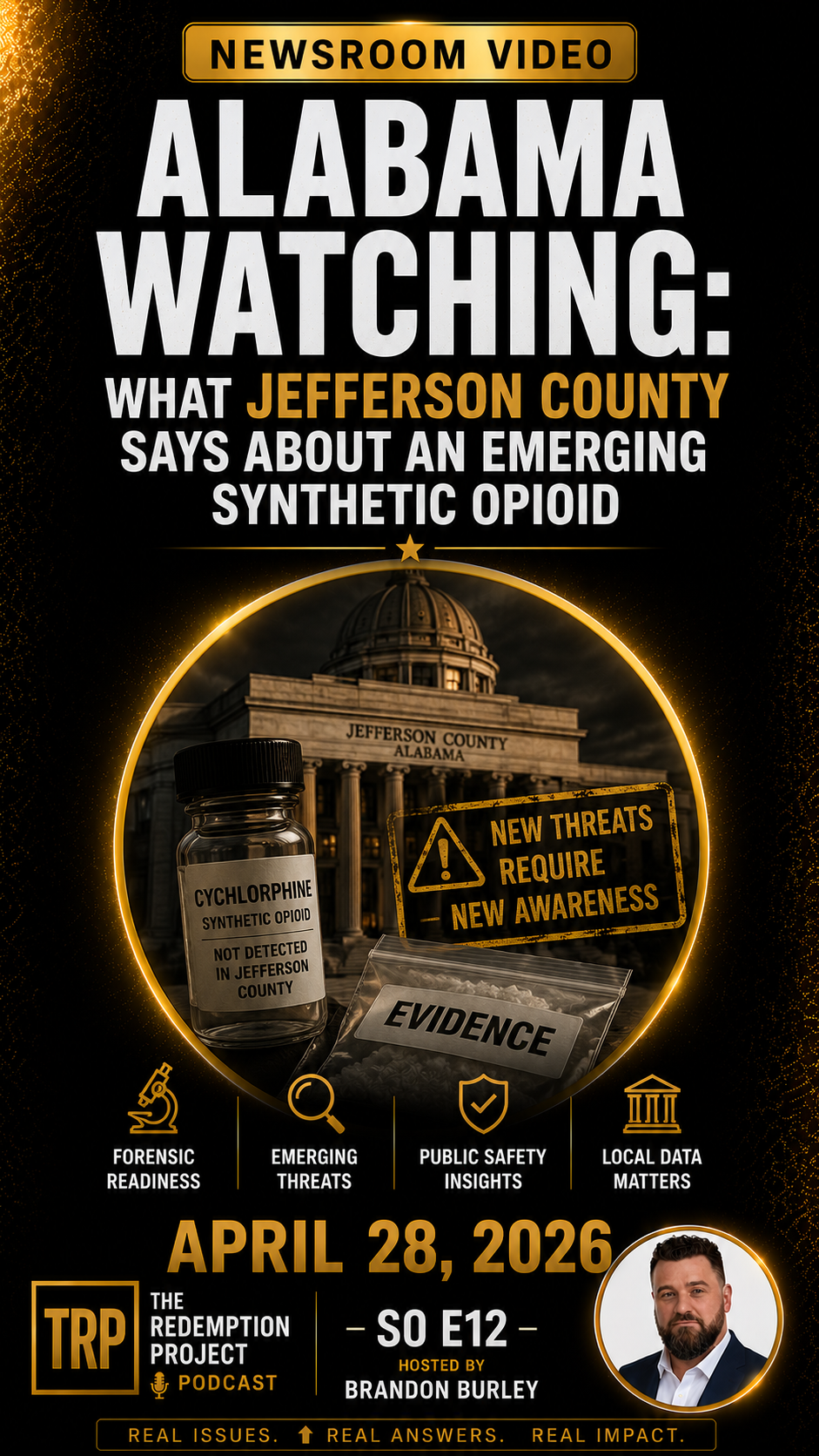
by Brandon Burley and The Redemption Project Jefferson County officials say cychlorphine has not been detected locally, but the larger issue is how forensic laboratories decide what they are prepared to see. Jefferson County forensic officials say a newly engineered synthetic opioid known as cychlorphine has not been detected in local postmortem toxicology casework. Officials say the compound is not currently part of routine toxicology panels, although internal communications have already been issued to maintain awareness of the drug. Cychlorphine was first confirmed in a U.S. seizure by a DEA forensic laboratory in 2024, with later detections reported in states including Texas, California, Illinois, Missouri, and Tennessee. In Tennessee, forensic officials have linked the compound to multiple overdose deaths under investigation, including at least one fatal case where it was the only opioid identified. Laboratory experts say detection often depends on whether a compound is included in routine screening or whether expanded testing is required. For now, Jefferson County says no local detection has been confirmed. That does not necessarily mean laboratories are unconcerned. It means awareness often begins before routine identification becomes necessary. As synthetic opioid chemistry continues to evolve, toxicology readiness increasingly depends on whether laboratory systems are prepared before compounds appear regularly enough to demand broader response. For forensic systems, the question is rarely only whether a compound is present. It is whether laboratories are positioned to recognize it when it arrives. I am a retired detective and criminal justice / government educator based in Tennessee. I am a commentary write for Tennessee Lookout and a weekly columnist with Knox TN Today . My work examines public policy, public safety systems and civic responsibility. My reporting and commentary have also appeared in Governing , The Arizona Capitol Times , South Florida Sun Sentinel , Police1 , among other state and regional outlets. Get full access to The Redemption Project Newsroom at newsroom.theredemptionproject.news/subscribe
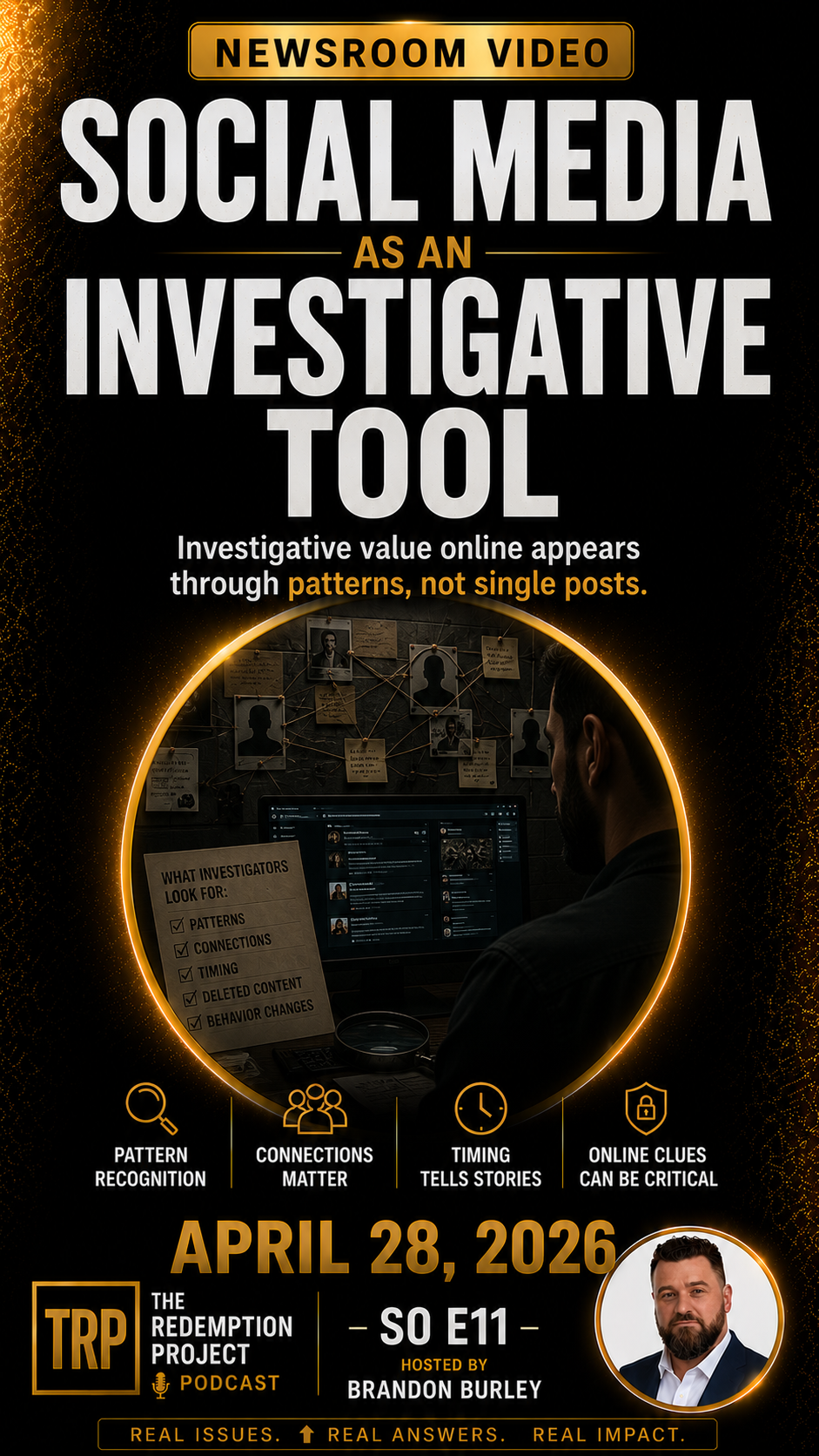
by Brandon Burley and The Redemption Project Investigative value online usually appears through patterns, not single posts. Repeated names, reaction behavior, deleted material, and timing often matter more than people realize. I am a retired detective and criminal justice / government educator based in Tennessee. I am a commentary write for Tennessee Lookout and a weekly columnist with Knox TN Today . My work examines public policy, public safety systems and civic responsibility. My reporting and commentary have also appeared in Governing , The Arizona Capitol Times , South Florida Sun Sentinel , Police1 , among other state and regional outlets. Get full access to The Redemption Project Newsroom at newsroom.theredemptionproject.news/subscribe
by Brandon Burley and The Redemption Project Sheriff campaigns often center on broad safety language. But the stronger voter questions usually involve staffing, jail operations, narcotics pressure, and how decisions function once campaigning ends. I am a retired detective and criminal justice / government educator based in Tennessee. I am a commentary write for Tennessee Lookout and a weekly columnist with Knox TN Today . My work examines public policy, public safety systems and civic responsibility. My reporting and commentary have also appeared in Governing , The Arizona Capitol Times , South Florida Sun Sentinel , Police1 , among other state and regional outlets. Get full access to The Redemption Project Newsroom at newsroom.theredemptionproject.news/subscribe
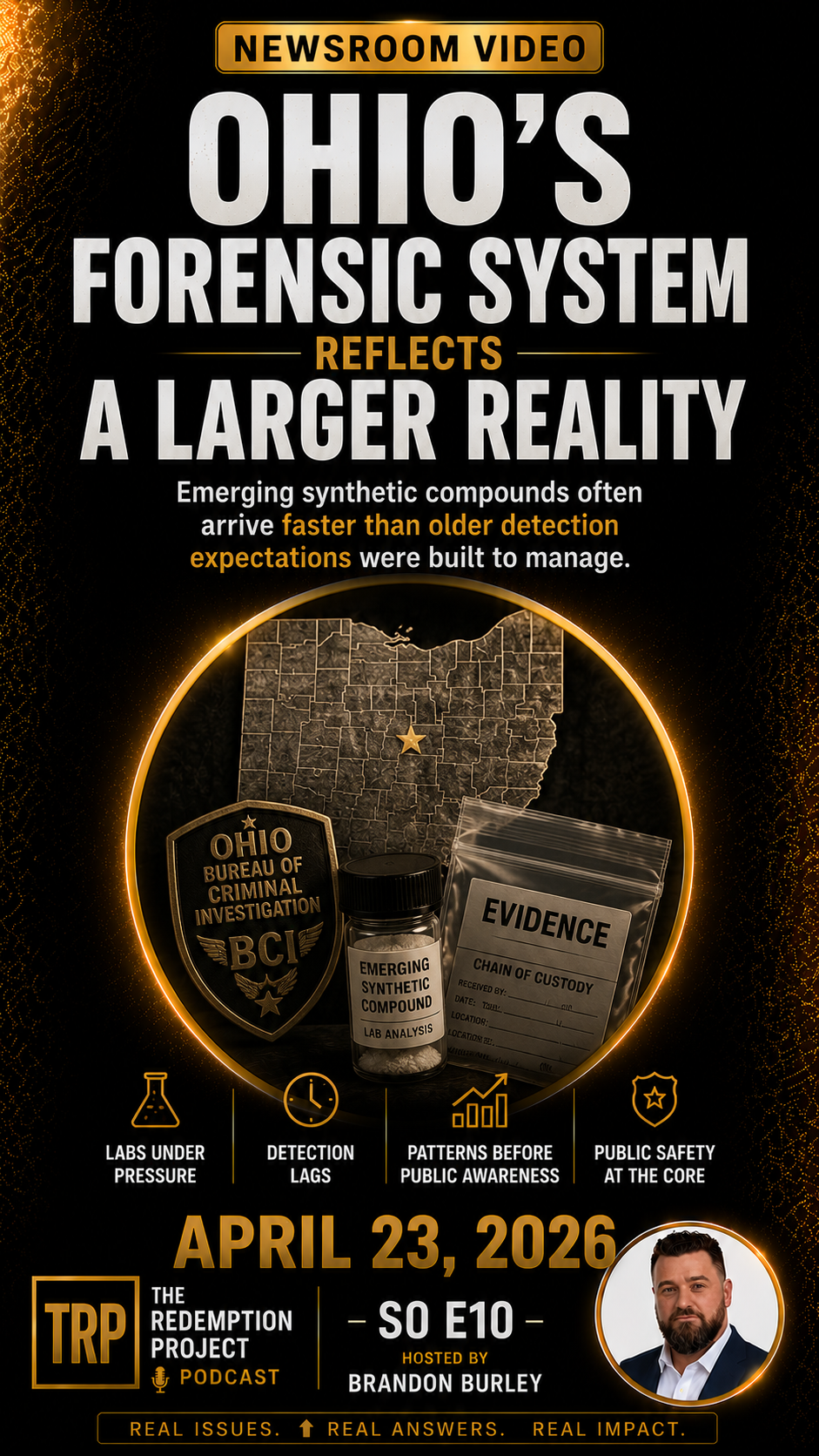
by Brandon Burley and The Redemption Project Ohio’s forensic system reflects a larger reality: emerging synthetic compounds often arrive faster than older detection expectations were built to manage. Labs usually meet that pressure before the public sees the pattern clearly. I am a retired detective and criminal justice / government educator based in Tennessee. I am a commentary write for Tennessee Lookout and a weekly columnist with Knox TN Today . My work examines public policy, public safety systems and civic responsibility. My reporting and commentary have also appeared in Governing , The Arizona Capitol Times , South Florida Sun Sentinel , Police1 , among other state and regional outlets. Get full access to The Redemption Project Newsroom at newsroom.theredemptionproject.news/subscribe

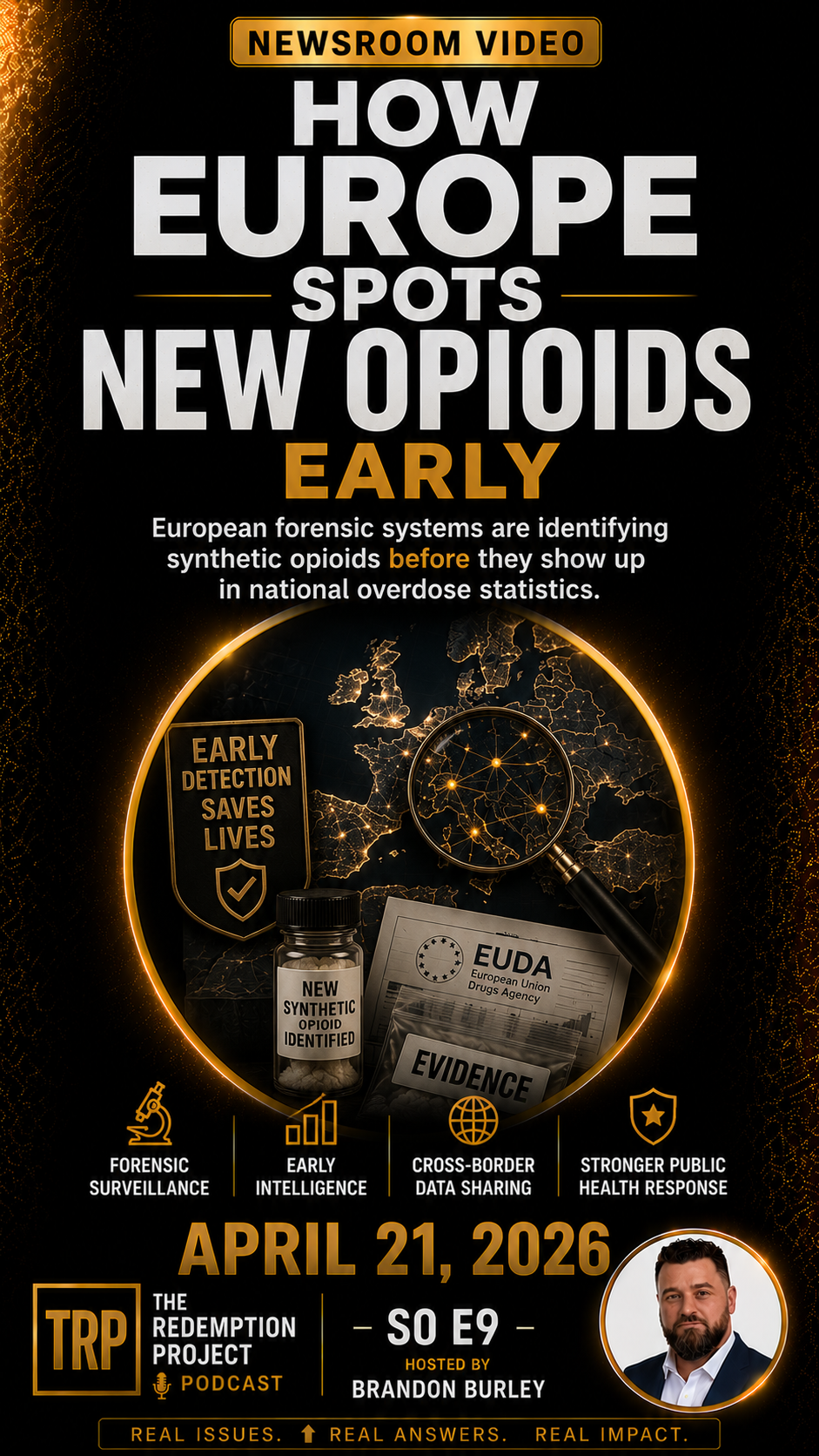
by Brandon Burley and The Redemption Project European forensic systems are increasingly identifying synthetic opioids before those substances become fully visible in national overdose statistics, giving health authorities earlier warning as chemical markets evolve. Europe’s drug monitoring systems are increasingly relying on forensic laboratories to identify new synthetic opioids before those drugs appear clearly in national overdose statistics. One emerging compound, cychlorphine, has already been detected through laboratory and early warning systems in multiple jurisdictions, including Germany and the United Kingdom. The broader challenge is that synthetic opioid markets are evolving faster than many public reporting systems were designed to move. Through the European Union Early Warning System, forensic laboratories can report newly identified substances before they are widely reflected in mortality data, giving health agencies and policymakers an earlier signal that a new drug may be entering circulation. German authorities have already confirmed cychlorphine in seized-drug investigations and moved to regulate it under laws designed for rapid response to emerging synthetic substances. The larger question now is whether forensic detection can continue moving fast enough as synthetic opioid chemistry becomes more complex. Across much of Europe, laboratory alerts often arrive before mortality systems fully reflect emerging compounds. That makes forensic detection not simply a technical process, but an increasingly important part of public health readiness. I am a retired detective and criminal justice / government educator based in Tennessee. I am a commentary write for Tennessee Lookout and a weekly columnist with Knox TN Today . My work examines public policy, public safety systems and civic responsibility. My reporting and commentary have also appeared in Governing , The Arizona Capitol Times , South Florida Sun Sentinel , Police1 , among other state and regional outlets. Get full access to The Redemption Project Newsroom at newsroom.theredemptionproject.news/subscribe
by Brandon Burley and The Redemption Project As newer synthetic opioids appear, responders are again asking how consistently naloxone behaves across changing compounds. The key point remains: naloxone still matters, but chemistry rarely stays static for long. I am a retired detective and criminal justice / government educator based in Tennessee. I am a commentary write for Tennessee Lookout and a weekly columnist with Knox TN Today . My work examines public policy, public safety systems and civic responsibility. My reporting and commentary have also appeared in Governing , The Arizona Capitol Times , South Florida Sun Sentinel , Police1 , among other state and regional outlets. Get full access to The Redemption Project Newsroom at newsroom.theredemptionproject.news/subscribe
Many people know they vote for both city and county officials, but fewer people understand what each level of local government actually controls. In Season 3, Episode 3 of Systems Explained , Brandon Burley explains the practical difference between a city council and a county commission: who they govern, what services they oversee, and why both can affect your daily life at the same time. This episode breaks down how city government usually handles things like city police, local roads, and utilities, while county government often oversees schools, sheriff’s offices, jails, libraries, health departments, and rural services. It also explains why taxes differ inside and outside city limits, how one road can change jurisdiction multiple times, and why where you live determines which government is responsible when something goes wrong. Systems Explained is part of The Redemption Project and focuses on systems people encounter often but rarely see clearly. Get full access to The Redemption Project Newsroom at newsroom.theredemptionproject.news/subscribe
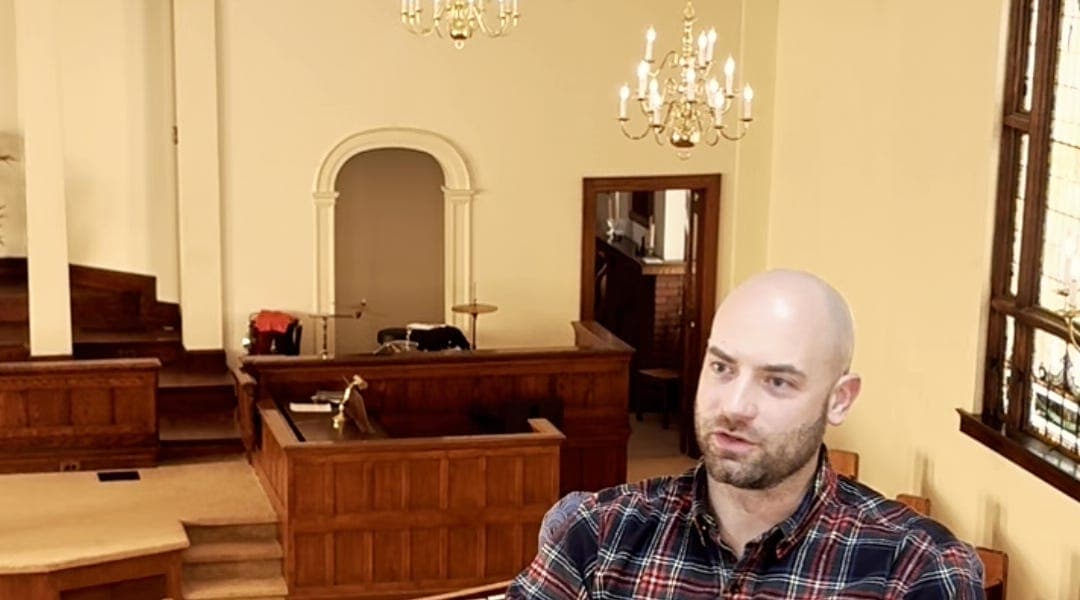
By Brandon Burley of The Redemption Project Redemption Story of the Week: Steve Smith Steve walked out of prison in August 2025 with nothing but the clothes on his back and a box of books. No family waiting.No friends.No safety net. Before prison, Steve knew the life he was living wasn’t right. A divorce sent him spiraling. Drugs followed. Then selling meth and heroin. Then prison. Behind bars, something changed. Steve found God. And instead of wasting the time, he used it—working to become someone different than the man who went in. When he was released, he came straight to Men of Valor Knoxville. Now, Steve is starting over from zero—but with purpose. He’s grateful for the structure, the accountability, and the opportunity to rebuild a life he never thought he’d have. Redemption doesn’t always come with applause.Sometimes it comes quietly—when a man decides he’s done living the old way. I am a retired detective and criminal justice / government educator based in Tennessee. I am a commentary write for Tennessee Lookout and a weekly columnist with Knox TN Today . My work examines public policy, public safety systems and civic responsibility. My reporting and commentary have also appeared in Governing , The Arizona Capitol Times , South Florida Sun Sentinel , Police1 , among other state and regional outlets. Get full access to The Redemption Project Newsroom at newsroom.theredemptionproject.news/subscribe
by Brandon Burley and The Redemption Project Most criminal justice debate focuses on sentencing and incarceration. Far less attention is given to what happens after release, even though that is often where public safety outcomes are shaped most directly. We still measure criminal justice at the wrong moment. Most public debate focuses on sentencing, incarceration levels, and whether a punishment sounds tough enough. But the most important question usually begins after someone leaves prison or jail. That is because most people who are incarcerated will eventually return to their communities, and the first year after release is often the most unstable part of the entire process. Housing problems, unemployment, untreated addiction, and weak supervision can all collide at once. When that happens, repeat offending often begins long before the next arrest ever appears in public statistics. That is why criminal justice is not really tested in the courtroom. It is tested after release, when structure becomes thinner and risk becomes real. A sentence may end on paper, but risk often begins where structure weakens. For many people, what happens after release determines whether reform becomes real or remains theoretical. The courtroom matters. But public safety is often decided later. I am a retired detective and criminal justice / government educator based in Tennessee. I am a commentary write for Tennessee Lookout and a weekly columnist with Knox TN Today . My work examines public policy, public safety systems and civic responsibility. My reporting and commentary have also appeared in Governing , The Arizona Capitol Times , South Florida Sun Sentinel , Police1 , among other state and regional outlets. Get full access to The Redemption Project Newsroom at newsroom.theredemptionproject.news/subscribe
Most people know that police officers and sheriff’s deputies both wear badges and answer calls, but the agencies behind them are built very differently. Brandon Burley explains the practical difference between a city police department and a county sheriff’s office: who they serve, how they are funded, who they answer to, and why one is usually appointed while the other is elected. This episode also explains why police departments usually operate under city government, why sheriffs often manage county jails and court security, how overlapping jurisdiction works, and why the answer can change depending on where you live. Using examples from places like Knoxville, Nashville, Chattanooga, and Los Angeles, the episode shows why two agencies can operate in the same area while still having very different responsibilities. Systems Explained is part of The Redemption Project and focuses on systems people encounter often but rarely see clearly. Get full access to The Redemption Project Newsroom at newsroom.theredemptionproject.news/subscribe
by Brandon Burley and The Redemption Project Large narcotics investigations often begin long before they look large. In many smaller communities, one officer noticing repeated movement, repeated names, or one local shift becomes the first signal that something larger may already be underway. I am a retired detective and criminal justice / government educator based in Tennessee. I am a commentary write for Tennessee Lookout and a weekly columnist with Knox TN Today . My work examines public policy, public safety systems and civic responsibility. My reporting and commentary have also appeared in Governing , The Arizona Capitol Times , South Florida Sun Sentinel , Police1 , among other state and regional outlets. Get full access to The Redemption Project Newsroom at newsroom.theredemptionproject.news/subscribe

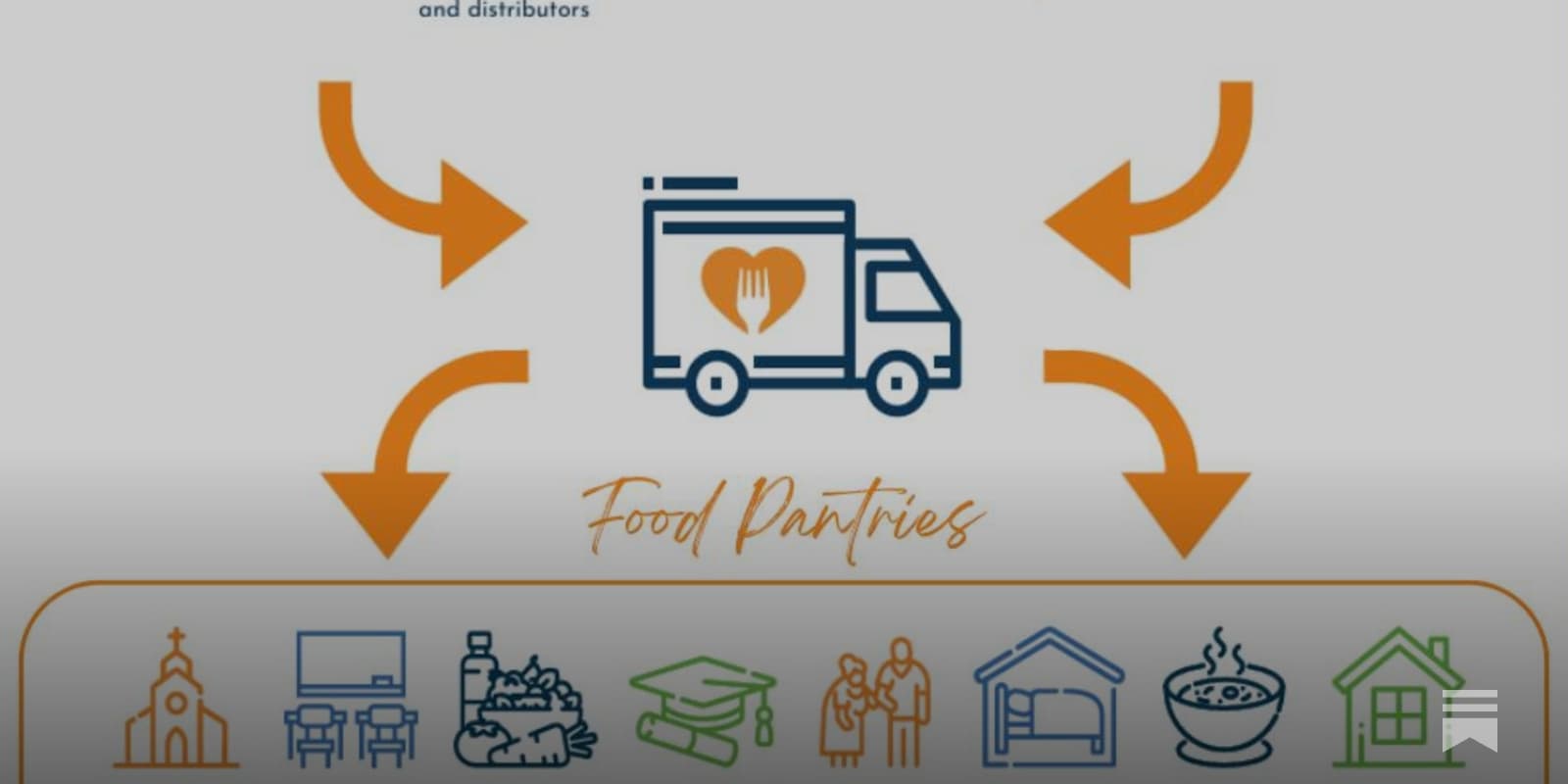
Most people use the terms food bank and food pantry like they mean the same thing. They do not. In this first episode of Systems Explained , Brandon Burley explains how the food distribution system actually works: why a food bank is usually a large supply center, why a food pantry is the local place where families actually receive food, and why understanding that difference matters if you want your donations to help more people. The episode also explains why cash donations often go farther than grocery-bin donations, how food banks use bulk purchasing power, why logistics matter, and how churches, schools, shelters, senior centers, and local nonprofits fit into the larger system. If you have ever wondered where donated food actually goes after it leaves the grocery store collection box, this episode explains the full process clearly and simply. New episodes focus on systems people talk about every day but often misunderstand. 🎙️ The Redemption Project: Systems Explained Questions for a future episode? Send them my way. Get full access to The Redemption Project Newsroom at newsroom.theredemptionproject.news/subscribe
by Brandon Burley and The Redemption Project Cyberbullying cases often become difficult because schools, parents, and law enforcement do not always operate from the same threshold. A disciplinary issue, a harmful message, and a criminal standard are not automatically the same thing; even when the pressure feels immediate. I am a retired detective and criminal justice / government educator based in Tennessee. I am a commentary write for Tennessee Lookout and a weekly columnist with Knox TN Today . My work examines public policy, public safety systems and civic responsibility. My reporting and commentary have also appeared in Governing , The Arizona Capitol Times , South Florida Sun Sentinel , Police1 , among other state and regional outlets. Get full access to The Redemption Project Newsroom at newsroom.theredemptionproject.news/subscribe
by Brandon Burley and The Redemption Project SNAP debates usually sound like product debates on the surface. But underneath them sits a larger policy question: does the public still agree on what food assistance is intended to solve, and how should trust be maintained while rules evolve? I am a retired detective and criminal justice / government educator based in Tennessee. I am a commentary write for Tennessee Lookout and a weekly columnist with Knox TN Today . My work examines public policy, public safety systems and civic responsibility. My reporting and commentary have also appeared in Governing , The Arizona Capitol Times , South Florida Sun Sentinel , Police1 , among other state and regional outlets. Get full access to The Redemption Project Newsroom at newsroom.theredemptionproject.news/subscribe
by Brandon Burley and The Redemption Project Arizona’s fentanyl response often gets discussed through enforcement numbers. But forensic systems carry another side of the burden: identifying compounds, confirming toxicology, and keeping pace with changing chemistry. Those pressures do not always rise at the same speed. I am a retired detective and criminal justice / government educator based in Tennessee. I am a commentary write for Tennessee Lookout and a weekly columnist with Knox TN Today . My work examines public policy, public safety systems and civic responsibility. My reporting and commentary have also appeared in Governing , The Arizona Capitol Times , South Florida Sun Sentinel , Police1 , among other state and regional outlets. Get full access to The Redemption Project Newsroom at newsroom.theredemptionproject.news/subscribe

by Brandon Burley and The Redemption Project A newly emerging synthetic opioid identified in Tennessee, Canada, and parts of Europe is highlighting a larger forensic challenge: surveillance systems often only detect what laboratories are already built to recognize. A new synthetic opioid is now forcing a bigger question across multiple countries: how often do new drugs spread before public systems fully catch them? The compound is called cychlorphine. It has already appeared in overdose investigations, forensic laboratories, and seized drug supplies in places including Tennessee, Canada, and parts of Europe. In Tennessee, forensic officials have linked it to multiple deaths under investigation, and the drug has been described as roughly ten times more potent than fentanyl. But the larger issue is not just the drug itself. Many overdose dashboards only show what laboratories are already built to detect. If a new compound is not part of routine testing, it can circulate long before official numbers fully reflect what is happening. That means chemistry can move faster than surveillance. Across multiple jurisdictions, cychlorphine has already shown how differently detection systems move depending on forensic design. In Canada, federal laboratory systems identified the compound and incorporated it into routine screening after validation through Health Canada’s Drug Analysis Service. In parts of Europe, early warning systems allowed laboratories to report detections before mortality data fully reflected the substance. In the United States, forensic identification often depends on state and regional laboratory workflows, which means detection can vary by jurisdiction even when seized drug material appears elsewhere. That creates a practical gap. A compound may already exist inside supply chains while public dashboards remain largely silent. Forensic laboratories often see chemical change first. Public systems usually catch up later. As synthetic opioid chemistry continues evolving, the central question is no longer only how dangerous a new compound may be, but how quickly institutions designed for detection can recognize what has changed. In that environment, surveillance is no longer only a reporting function. It is part of public health readiness. I am a retired detective and criminal justice / government educator based in Tennessee. I am a commentary write for Tennessee Lookout and a weekly columnist with Knox TN Today . My work examines public policy, public safety systems and civic responsibility. My reporting and commentary have also appeared in Governing , The Arizona Capitol Times , South Florida Sun Sentinel , Police1 , among other state and regional outlets. Get full access to The Redemption Project Newsroom at newsroom.theredemptionproject.news/subscribe
Dewey Burton’s past isn’t easy to talk about — and it shouldn’t be. Before coming to Men of Valor, Dewey had already been convicted of robbery. After serving his time and being out of prison for just over a year, he was charged with aggravated child neglect. When that case crossed my desk years ago, I knew from the way Dewey responded that it wasn’t going to sit right with me. Some cases don’t. This was one of them. That matters. Redemption does not erase accountability. While incarcerated, Dewey applied to multiple halfway houses. Every door closed — except one. Men of Valor was the only program willing to take him. Not because they minimized what he’d done, but because they believed that change still had to be possible if accountability meant anything at all. While still in jail, Dewey completed the Men of Valor F.O.C.U.S. class — a 12-week program centered on discipline, responsibility, and confronting the truth about oneself. He didn’t pretend he could fix his life on his own. In fact, he was clear about the opposite. “I know I can’t do this by myself,” Dewey said. Since entering the Men of Valor program, Dewey has been working and rebuilding structure in his life. One of the biggest lessons he’s had to learn is slowing down — not rushing decisions, not reacting emotionally, not defaulting to old patterns when pressure hits. What surprised him most wasn’t the rules or the workload. It was the love. Dewey admits that growing up, he wasn’t used to the kind of consistent, accountable care he’s experienced at Men of Valor. Love with boundaries was unfamiliar territory. It forced him to confront how much of his past behavior was shaped by what he never learned growing up — especially his relationship with his father. That realization hasn’t excused his choices. But it has made him take ownership of changing them. Today, Dewey says he is following Jesus — not as a slogan, but as a daily discipline. He knows trust is rebuilt slowly. He knows redemption isn’t owed. And he understands that some people will never be comfortable with his story. He’s learning to live with that too. Redemption isn’t pretending the past didn’t happen. It’s choosing to live differently anyway — every single day. Get full access to The Redemption Project Newsroom at newsroom.theredemptionproject.news/subscribe
by Brandon Burley and The Redemption Project Addiction pressure is not limited to large cities. But access to treatment often is. In many smaller communities, the same need exists with fewer immediate options — which means geography quietly shapes recovery outcomes more than many people realize. I am a retired detective and criminal justice / government educator based in Tennessee. I am a commentary write for Tennessee Lookout and a weekly columnist with Knox TN Today . My work examines public policy, public safety systems and civic responsibility. My reporting and commentary have also appeared in Governing , The Arizona Capitol Times , South Florida Sun Sentinel , Police1 , among other state and regional outlets. Get full access to The Redemption Project Newsroom at newsroom.theredemptionproject.news/subscribe
19 deaths tied to a newer synthetic #opioid One thing the public rarely sees: forensic labs often encounter new chemistry long before public warning systems catch up. The science usually arrives before the headlines. Get full access to The Redemption Project Newsroom at newsroom.theredemptionproject.news/subscribe
Dustin Morgan’s story carries a weight that never fully goes away — and he doesn’t pretend that it should. Dustin was convicted of second-degree murder. He shot and killed a man. He pled guilty and received a 15-year sentence. There’s no minimizing that, and Dustin doesn’t try to. He owns it. Before prison, Dustin worked as a paramedic — a job built around saving lives. Losing that identity, and then facing the reality of taking a life, forced him into a level of humility he had never known before. Prison stripped everything familiar away. Titles, confidence, control — gone. What remained was the hard work of reckoning with his actions and deciding whether his life would end there or be rebuilt from the ground up. Through Men of Valor Knoxville, Dustin began that rebuilding process. The work wasn’t dramatic. It was humbling. He learned discipline, accountability, and how to show up consistently — even when the work felt small or unseen. Today, Dustin speaks openly about how humbling his current work has been compared to who he once was. Not with bitterness — but with gratitude. He understands now that growth often comes through being brought low. Dustin is nearing graduation from Men of Valor. He’s focused on the next chapter of his life — not pretending the past didn’t happen, but refusing to let it define the rest of his story. Redemption doesn’t erase consequences. But it does make transformation possible. Get full access to The Redemption Project Newsroom at newsroom.theredemptionproject.news/subscribe
Jesse Crosson was arrested just after his 18th birthday and sentenced to 32 years in prison for a robbery and non-fatal shooting. For nearly two decades, prison was the only adult life he knew. When Jesse was granted a conditional pardon in 2021 , he was released with just an hour and a half’s notice —no reentry plan, no housing secured, no roadmap waiting for him. What he did have was preparation. In this conversation, Jesse shares why he believes reentry doesn’t start at the gate—it starts on day one of incarceration . He talks about how he used his time inside to build skills, relationships, and discipline, and why having options mattered more than having a plan when freedom came suddenly. This episode is about accountability, preparation, and the reality of starting over when the system doesn’t slow down for you. Get full access to The Redemption Project Newsroom at newsroom.theredemptionproject.news/subscribe
In this episode of The Redemption Project , Brandon Burley sits down with TK , a licensed therapist and recovery professional whose life was nearly ended by addiction before it was rebuilt through faith, accountability, and community. TK’s story challenges stereotypes. He didn’t grow up in poverty or chaos—he grew up privileged. And yet addiction still took hold, escalating from early alcohol use to prescription opioids, pain clinics, dealing, methamphetamine, and ultimately a near-fatal overdose that left him on life support. After being revived with Narcan nine times, TK faced prison, the loss of his career, and the collapse of his family. What followed wasn’t a shortcut to redemption—it was treatment, humility, consequences, and years of rebuilding from the ground up. Today, TK is a licensed Marriage and Family Therapist and Licensed Alcohol & Drug Abuse Counselor (LADAC II) in Tennessee—despite felony convictions that nearly disqualified him from licensure. His journey offers rare insight into addiction, recovery, criminal justice, and what actually sustains long-term change. This conversation explores: • Why addiction doesn’t discriminate by class or background • The moment TK realized he couldn’t save himself • Near-death, faith, and the cost of recovery • Employment barriers for people with felony records • Why community—not independence—keeps people alive This is not a slogan-driven recovery story. It’s a real one. Get full access to The Redemption Project Newsroom at newsroom.theredemptionproject.news/subscribe
Sean Luttrell’s first arrest came in 2023. By his own words, he wasn’t confused about how he got there. He was living an evil life — one bad decision stacked on top of another until the weight finally caught up with him. The arrest didn’t surprise him. In a way, it confirmed what he already knew: the path he was on only led one direction. While incarcerated for aggravated assault, something shifted. Sean didn’t start with grand promises or dramatic declarations. He hit his knees. He opened his Bible. And he began reading it every day — not for comfort, not to pass time, but because he knew he needed real change. Slowly, he says, he could feel something happening inside him. Not all at once. Not overnight. But enough to know this wasn’t just another jailhouse phase. After serving one year, Sean expected to be released. Instead, he stayed another year. At the time, it felt like a setback. Looking back, Sean believes it wasn’t punishment — it was preparation. “God had other plans,” he says. Plans that required more time, more discipline, and fewer distractions. During that additional year, Sean completed the Men of Valor program while still inside the jail. He chose growth over bitterness. Structure over excuses. Accountability over shortcuts. It wasn’t easy — but it was necessary. Redemption, Sean learned, doesn’t always mean getting out sooner. Sometimes it means staying longer… so you don’t come out the same. Today, Sean carries that lesson with him. He doesn’t deny his past or minimize his mistakes. He understands the harm his choices caused. But he also understands that change is possible — when someone finally stops running and starts surrendering. Sean’s story isn’t loud. It isn’t flashy. It’s quiet, deliberate, and honest. And sometimes, those are the ones that last. Get full access to The Redemption Project Newsroom at newsroom.theredemptionproject.news/subscribe
Human trafficking often hides in plain sight. In this narrated journalism episode of The Redemption Project , Brandon Burley examines a new Tennessee law that requires licensed tattoo artists to complete human trafficking awareness training—and why that policy matters. Drawing from reporting, survivor advocacy, and law enforcement experience, this episode explores how traffickers have historically used tattoos as tools of control, why tattoo professionals are uniquely positioned to notice warning signs, and how community-based awareness can become a bridge between vulnerable individuals and help. This is not an argument that tattoos equal trafficking. It’s a discussion about training, pattern recognition, and the quiet role everyday professionals can play in disrupting exploitation. This episode is based on Brandon Burley’s recent opinion column published in The Knoxville News Sentinel and is part of Season 4. Get full access to The Redemption Project Newsroom at newsroom.theredemptionproject.news/subscribe
What actually changes lives inside prison—and what only sounds good on paper? In this extended conversation, Brandon Burley sits down with Dr. Robin LaBarbera , a leading researcher on prison-based theological education, reentry, and well-being inside correctional systems. Drawing from years of firsthand research inside prisons and jails, Dr. LaBarbera explains why transformation cannot be measured by recidivism alone, how faith-based education reshapes prison culture, and why community, accountability, and purpose matter more than policy slogans. This episode explores: Why well-being is a stronger indicator of successful reentry than raw recidivism rates What prison-based theological education gets right—and why it changes entire housing units The gap between academic research and real-world practice How redemption stories inside prison challenge public assumptions about crime and punishment Why human dignity must come before policy outcomes This is not a debate episode. It’s a working conversation between research and lived reality—grounded in evidence, humility, and firsthand experience. Whether you’re a practitioner, educator, policymaker, or simply someone asking how people truly change, this conversation offers clarity few discussions ever reach. Get full access to The Redemption Project Newsroom at newsroom.theredemptionproject.news/subscribe
In this narrated commentary, Brandon Burley reflects on his recent opinion piece examining why addiction impacts every community—but recovery resources often do not. Drawing from reporting in East Tennessee, the episode explores how smaller cities like Oak Ridge experience the same pressures as larger urban centers—substance misuse, fractured families, and relapse—without the same concentration of treatment, visibility, or long-term recovery infrastructure. The discussion highlights First Recovery in Oak Ridge as an example of sustained, community-based support that goes beyond short-term intervention, connecting people and families to accountability, structure, and practical help. The episode also addresses broader regional data on addiction, homelessness, and overdose deaths, and why recovery efforts cannot remain centralized if communities want meaningful public safety outcomes. Get full access to The Redemption Project Newsroom at newsroom.theredemptionproject.news/subscribe
From Maximum Security to Redemption. Michael Charles King was convicted of murder in 1992 and sentenced to life with the possibility of parole. He spent years in maximum security, planned an escape for over a year—and was caught the same day.But that’s not where his story ends.In this full conversation, Michael talks honestly about what prison couldn’t fix, what finally changed him, and how love, accountability, and structure reshaped his life after release.Paroled in 2023. Nearly lost everything again. Didn’t quit. Today, he works with Men of Valor Knoxville and mentors other men rebuilding their lives from the inside out.This isn’t a story about excusing the past.It ’s about what real redemption looks like when it’s lived daily. Get full access to The Redemption Project Newsroom at newsroom.theredemptionproject.news/subscribe
In this episode, Brandon Burley breaks down one of the most misunderstood parts of criminal justice: pardons . Following Tennessee Governor Bill Lee’s recent decision to grant clemency to 33 individuals—including a high-profile recipient—public conversation quickly blurred the line between forgiveness, expungement, and erasure of a criminal record. This episode explains, in plain terms, what a pardon actually does under Tennessee law—and just as importantly, what it does not do. Brandon walks through how pardons affect employment, housing, professional licensing, travel, and public records, why pardons are not shortcuts through the legal system, and how they fit into the much longer and often misunderstood process of expungement. He also explains why pardons remain rare, discretionary, and the result of extensive review—not public pressure or celebrity status. To ground the discussion, Brandon references a firsthand interview with Clark Shepherd, one of the individuals granted clemency, and outlines the years-long process behind that decision. This episode is part of The Redemption Project ’s narrated journalism series—focused on clarity, context, and facts beyond headlines Get full access to The Redemption Project Newsroom at newsroom.theredemptionproject.news/subscribe
Matt Holder’s story isn’t about a single bad decision — it’s about how addiction slowly dismantles a life, one rationalization at a time. Growing up in East Tennessee, Matt came from a stable family, earned a degree in criminal justice, and built a career. But prescription opioids changed everything. What started as pain management turned into years of addiction, felony charges, repeated incarceration, probation violations, and the constant weight of consequences he couldn’t outrun. At his lowest point, Matt was facing a potential 28-year sentence and believed there was no way out. What followed was not a miracle moment — it was structure, accountability, brutal honesty, and people willing to walk with him without excusing his behavior. In this conversation, Matt walks through: How addiction escalates quietly and relentlessly Why “white-knuckling” recovery fails The role jail, probation, and treatment really played in his transformation What accountability looks like when grace doesn’t erase consequences How redemption is built over years, not moments Today, Matt works in recovery and ministry, advocates for people reentering society, and lives a life that looks nothing like the one that nearly ended him. This is a long-form conversation for anyone who wants to understand what real change actually takes , both inside the justice system and beyond it. Get full access to The Redemption Project Newsroom at newsroom.theredemptionproject.news/subscribe
n this Season 4 episode of The Redemption Project , Brandon Burley narrates and comments on a letter to the editor he wrote for the Chattanooga Times Free Press about a reentry support program coming to the city—one with a documented record of reducing recidivism. Drawing from firsthand experience in law enforcement and direct visits to Men of Valor campuses in Tennessee, Brandon explains why structured reentry matters for public safety. He breaks down how housing, employment, accountability, and decompression after incarceration intersect—and why the absence of those supports often sends people right back into the system. While this episode focuses on Chattanooga, the broader issue applies nationwide: when people leave jail or prison without stability, the conditions for reoffending quietly rebuild themselves. Season 4 of The Redemption Project features narrated journalism, letters, and reported commentary examining criminal justice, reentry, and public safety beyond headlines. Get full access to The Redemption Project Newsroom at newsroom.theredemptionproject.news/subscribe
Do you think Kris has changed? Is he still a criminal or is he reformed? Get full access to The Redemption Project Newsroom at newsroom.theredemptionproject.news/subscribe
Kevin’s story isn’t built on a single dramatic turning point. It’s built on decisions. In this short-form episode, Kevin talks about how small choices stacked up over time and eventually led him to prison. Inside, the noise faded—and what remained was the truth he couldn’t avoid anymore: the life he had been living wasn’t working, and no one was coming to rescue him from it. Kevin shares what it was like to encounter Men of Valor, a program that demanded accountability, discipline, and humility. There were no shortcuts—only the daily choice to take responsibility and keep going. This episode of The Redemption Project is about quiet change, honest work, and rebuilding life one decision at a time. Get full access to The Redemption Project Newsroom at newsroom.theredemptionproject.news/subscribe
In this narrated episode, Brandon Burley reads and reflects on an opinion piece originally published in The Daily Memphian examining why second chance hiring is a public safety issue—not just an employment one. While the article focuses on Memphis, the argument applies far beyond one city. When people return from prison or jail without access to work, housing, transportation, or licensing pathways, the conditions for reoffending are quietly rebuilt. Public safety doesn’t improve by closing more doors. It improves by opening the right ones back. This episode explores how background checks, licensing barriers, housing scarcity, and transportation gaps intersect—and why responsibility for change doesn’t rest solely with government, but with employers, communities, and citizens willing to step in. Season 4 of The Redemption Project features narrated journalism and reported essays on criminal justice, reentry, and public safety. Get full access to The Redemption Project Newsroom at newsroom.theredemptionproject.news/subscribe
Clark doesn’t begin his story with a testimony. He starts with the record. Manufacturing methamphetamine. Identity theft. Criminal simulation. Unauthorized use. A list of charges that once defined his life. Addiction drove the collapse—relationships failed, trust disappeared, and prison became the inevitable outcome. In this long-form conversation, Clark talks about what actually changed him while incarcerated: structure, accountability, faith lived out daily, and people who refused to let him drift. Redemption didn’t arrive as relief. It arrived as responsibility. Years later, Clark was granted a pardon by Governor Bill Lee. The paperwork made headlines—but it didn’t create the change. It recognized it. This episode of The Redemption Project is about confronting the past honestly, rebuilding consistently, and the people who walk with you long before the world notices. 🎧 New episodes release weekly. Get full access to The Redemption Project Newsroom at newsroom.theredemptionproject.news/subscribe
In this episode of The Redemption Project podcast (Season 4, Episode 3), I read and comment on my article originally published in Knox TN Today: “What People Don’t See About Life After Jail in Knoxville.” This piece sheds light on the hidden challenges people face after leaving jail—beyond what most of the public sees or understands. From housing and employment barriers to healthcare gaps and societal stigma, the realities of reentry demand deeper attention and practical support. In this read-aloud and commentary, we explore: • The unseen obstacles of life after jail in Knoxville • Why traditional measures of “success” miss the real stories • The importance of community, structure, and accountability • How programs and ministries are filling the gaps For the original written article, visit: https://www.knoxtntoday.com/what-people-dont-see-about-life-after-jail-in-knoxville/ The Redemption Project tells real stories of change, accountability, and second chances, hosted by Brandon Burley. Get full access to The Redemption Project Newsroom at newsroom.theredemptionproject.news/subscribe
Kris shares his story of coming to Men of Valor Knoxville after being released from Bledsoe Prison and choosing to stay—not because he had to, but because he knew he needed structure, accountability, and community. In this short-form conversation, Kris talks about navigating self-doubt, facing unexpected responsibilities like child support, and how relationships—not just sobriety—became the foundation for lasting change. Today, he serves as the ReEntry Minister and Family Coordinator at Men of Valor Knoxville, helping others walk the same path he once did. This episode is part of The Redemption Project —real stories about responsibility, faith, and rebuilding life after incarceration. Get full access to The Redemption Project Newsroom at newsroom.theredemptionproject.news/subscribe
In this episode of The Redemption Project podcast, I read and comment on my article originally published in Knox TN Today: “Mission of Hope, at Christmas and Every Other Day of the Year.” This piece reflects on how ministries and community partners work year-round—not just during the holidays—to care for people in need, extend compassion, and provide meaningful help that leads to stability and purpose. In this read-aloud and commentary, we explore: • What hope looks like in action, not just in intention • How community ministries sustain support beyond seasonal generosity • Why long-term relationships matter in recovery and reentry • The broader impact of consistent care in building resilient lives For the original written article, visit: https://www.knoxtntoday.com/mission-of-hope-at-christmas-and-every-other-day-of-the-year/ The Redemption Project tells real stories of change, accountability, and second chances, hosted by Brandon Burley. Get full access to The Redemption Project Newsroom at newsroom.theredemptionproject.news/subscribe
A long-form conversation with Savannah Ford, whose life once revolved around addiction, incarceration, and the belief that she didn’t really matter. Savannah talks about growing up in Sevier County, years of IV drug use and repeated overdoses, serving time in jail, and what it was like to walk out with no structure—and fall right back into the cycle. She reflects on the moment a court decision diverted her into treatment, the slow work of accountability and faith, and why staying—long after the program ended—changed everything. Today, Savannah works on staff at FOCUS Ministries, helping other women navigate the same road she once walked. This conversation is part of The Redemption Project —a podcast about real people, real consequences, and the long, imperfect work of change. 🎧 New episodes release weekly on Spotify and major podcast platforms. Get full access to The Redemption Project Newsroom at newsroom.theredemptionproject.news/subscribe
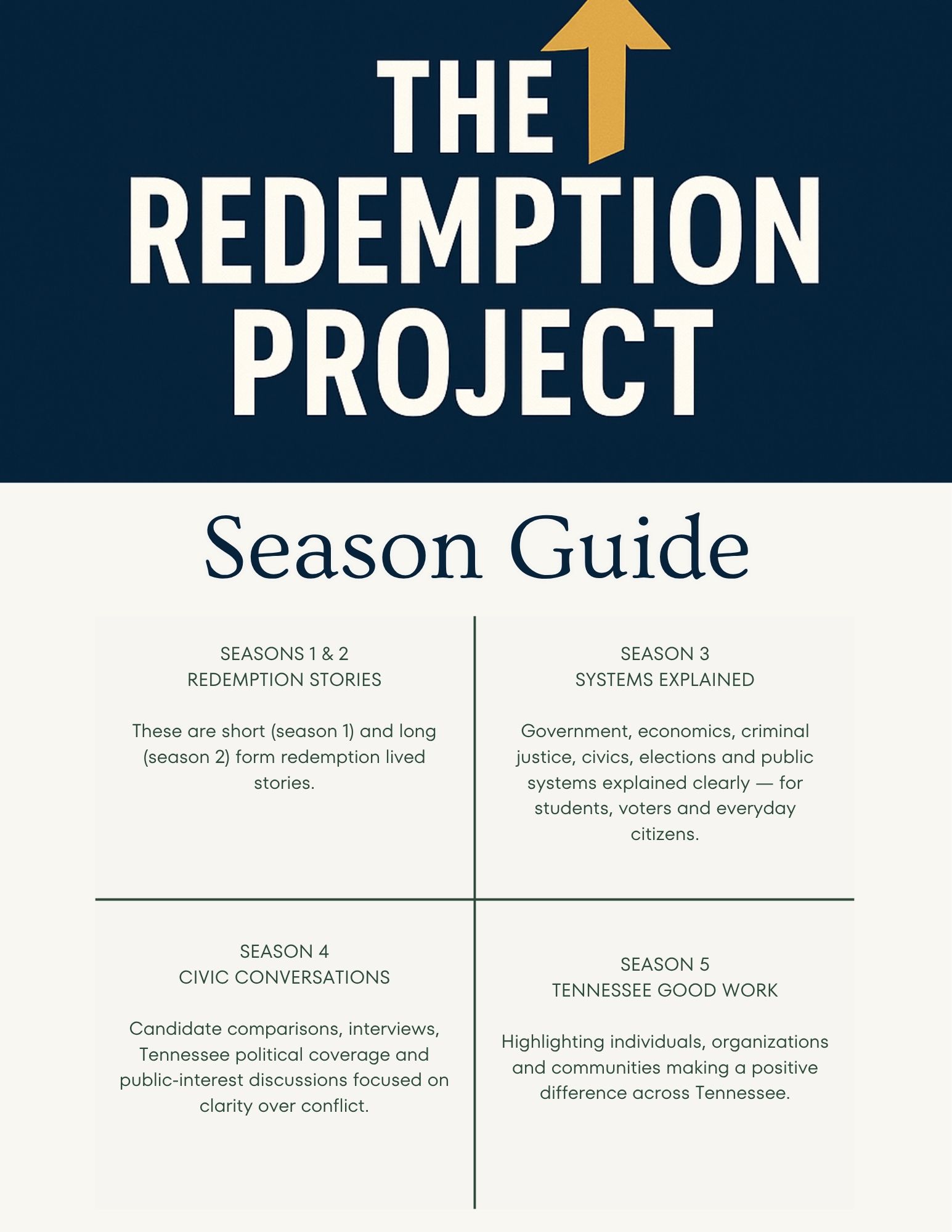
Hey! Welcome to season 2. In season 2, I will be focused on more long form storytelling from individuals who have overcome their demons. Season 1 was more short from storytelling (less than 10 minutes), and we will have that again in season 3 if thats what you like! Season 4 is narrated Journalism. That is where I will be reading, and/or commenting on my own journalism and those podcasts I am trying to keep around the 2 minute mark. Season 5 is episodes of me teaching. I will be uploading videos of me teaching criminal justice to middle school and high school students. This may include videos with guest speakers, or field trips- but it is everything that is part of teaching criminal justice. Season 6 is all about ministries. Ministries throughout the United States that are doing great things in the redemption world. Get full access to The Redemption Project Newsroom at newsroom.theredemptionproject.news/subscribe
What do you think about Dwan's position? His story will be out January 26, 2026. Get full access to The Redemption Project Newsroom at newsroom.theredemptionproject.news/subscribe
In this episode of The Redemption Project , I read and comment on my article “What Redemption Looks Like in Knoxville: A Day Inside Men of Valor,” originally published in Knox TN Today . The piece offers a firsthand look inside Men of Valor Knoxville—a long-term reentry program built on accountability, structure, and community. It explores what life actually looks like for men transitioning out of incarceration, beyond slogans and statistics. This episode reflects on what redemption requires in practice: time, responsibility, mentorship, and systems willing to invest in people after prison. Redemption doesn’t erase the past—it shapes what comes next. Read the original article here: https://www.knoxtntoday.com/what-redemption-looks-like-in-knoxville-a-day-inside-men-of-valor/ Get full access to The Redemption Project Newsroom at newsroom.theredemptionproject.news/subscribe
Hey! Welcome to season 4. Season 4 is all about narrated journalism. These short form episodes should all be around the 2 minute mark. I would love to hear your thought on each one! Get full access to The Redemption Project Newsroom at newsroom.theredemptionproject.news/subscribe
A short conversation with Duan, who chose to continue his journey with Men of Valor Knoxville after his release from the Knox County Jail. After completing the Men of Valor program while incarcerated, Duan could have walked away. Instead, even while on enhanced probation, he chose to stay focused on the work in front of him. For Duan, this season isn’t about fear — it’s about focus. He talks about getting clean and sober, learning new ways to cope, and why turning to God changed how he handles life’s problems. This conversation is part of The Redemption Project , a podcast about real people, real consequences, and the ongoing work of change. 🎧 Full conversations available weekly on Spotify and major podcast platforms. Get full access to The Redemption Project Newsroom at newsroom.theredemptionproject.news/subscribe
Bobby, now works for Men of Valor but it wasn't always that way. Bobby gives us the details on how this transformation was possible! Get full access to The Redemption Project Newsroom at newsroom.theredemptionproject.news/subscribe
This week’s Redemption Story comes from Knoxville, Tennessee. John Duck graduates from the Men of Valor residential program on December 26, 2025—the day after Christmas, and his daughter’s birthday. Hard to imagine a better gift.John was addicted from age 13 to 43. A former gang member. In and out of prison. A man the world would’ve written off a long time ago.But in a prison cell, he met God.And everything started to change.He’s now been sober for three years.He’s rebuilding his life.And after he graduates, John wants to stay with Men of Valor and pour into the next group of men—because, as he told me:“They shaped me into somebody who was tired of killing the community… and wanted to help the community.”That’s redemption.That’s Knoxville.That’s what happens when faith, accountability, and second chances collide. Get full access to The Redemption Project Newsroom at newsroom.theredemptionproject.news/subscribe
A brief explanation of how seasons and episodes are organized on The Redemption Project, and how listeners can jump in wherever they’re most interested. Get full access to The Redemption Project Newsroom at newsroom.theredemptionproject.news/subscribe
This is the full, unedited 60-minute radio interview from The Weekly Law Round-up, where The Redemption Project is introduced; discussing redemption, recovery, reentry, and public safety.The conversation explores what life actually looks like after incarceration, the role of accountability and structure in long-term recovery, and why some reentry approaches succeed while others fail.Topics include:• Life after prison and reentry challenges• Addiction, recovery, and personal responsibility• Faith-based and community reentry programs• Reducing recidivism while improving public safety• What real rehabilitation looks like beyond policy slogansThe Redemption Project focuses on real stories of transformation, responsibility, and second chances.For written stories and additional resources, visit: www.BurleyBooks.com Get full access to The Redemption Project Newsroom at newsroom.theredemptionproject.news/subscribe