Skip to content
TRP
“What People Don’t See About Life After Jail in Knoxville” | Article Read + Commentary

Systems Explained

“What People Don’t See About Life After Jail in Knoxville” | Article Read + Commentary

135

In this episode of The Redemption Project podcast (Season 4, Episode 3), I read and comment on my article originally published in Knox TN Today: “What People Don’t See About Life After Jail in Knoxville.” This piece sheds light on the hidden challenges people face after leaving jail—beyond what most of the public sees or understands. From housing and employment barriers to healthcare gaps and societal stigma, the realities of reentry demand deeper attention and practical support. In this read-aloud and commentary, we explore: • The unseen obstacles of life after jail in Knoxville • Why traditional measures of “success” miss the real stories • The importance of community, structure, and accountability • How programs and ministries are filling the gaps For the original written article, visit: https://www.knoxtntoday.com/what-people-dont-see-about-life-after-jail-in-knoxville/ The Redemption Project tells real stories of change, accountability, and second chances, hosted by Brandon Burley. Get full access to The Redemption Project Newsroom at newsroom.theredemptionproject.news/subscribe

“What People Don’t See About Life After Jail in Knoxville” | Article Read + Commentary

Playback continues in the player bar at the bottom of the screen.
Related Episodes

Public Safety Isn’t Just Policing — It’s Second Chance Hiring

Systems Explained

Public Safety Isn’t Just Policing — It’s Second Chance Hiring

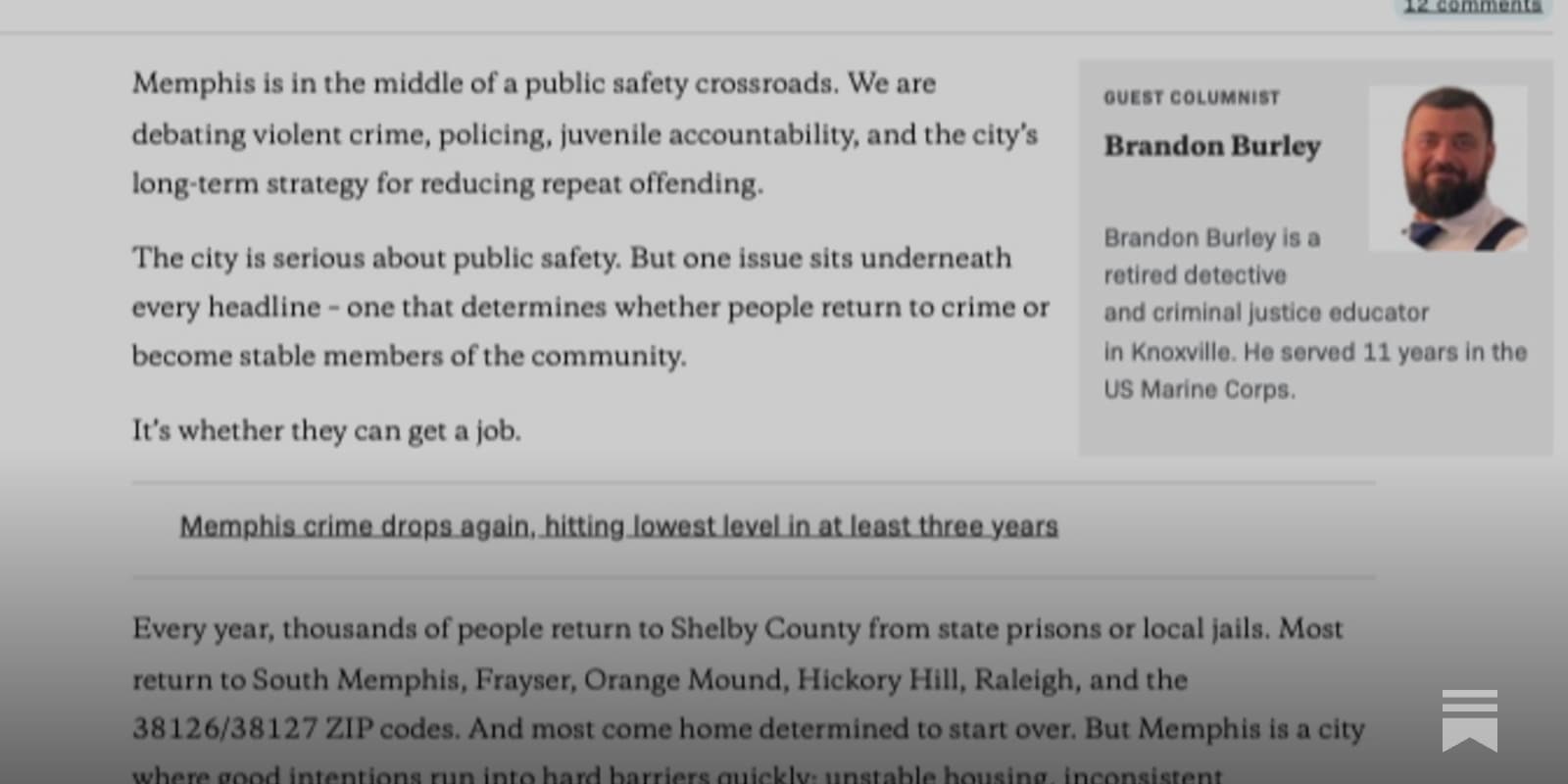
In this narrated episode, Brandon Burley reads and reflects on an opinion piece originally published in The Daily Memphian examining why second chance hiring is a public safety issue—not just an employment one. While the article focuses on Memphis, the argument applies far beyond one city. When people return from prison or jail without access to work, housing, transportation, or licensing pathways, the conditions for reoffending are quietly rebuilt. Public safety doesn’t improve by closing more doors. It improves by opening the right ones back. This episode explores how background checks, licensing barriers, housing scarcity, and transportation gaps intersect—and why responsibility for change doesn’t rest solely with government, but with employers, communities, and citizens willing to step in. Season 4 of The Redemption Project features narrated journalism and reported essays on criminal justice, reentry, and public safety. Get full access to The Redemption Project Newsroom at newsroom.theredemptionproject.news/subscribe

S3 E3
194
Open episodeWatch
Also available on
  • Substack
  • YouTube
  • Apple Podcasts(Coming soon)
  • Spotify(Coming soon)
  • iHeartRadio(Coming soon)
  • Amazon Music(Coming soon)
Why Chattanooga’s New Reentry Program Matters for Public Safety

Systems Explained

Why Chattanooga’s New Reentry Program Matters for Public Safety

n this Season 4 episode of The Redemption Project , Brandon Burley narrates and comments on a letter to the editor he wrote for the Chattanooga Times Free Press about a reentry support program coming to the city—one with a documented record of reducing recidivism. Drawing from firsthand experience in law enforcement and direct visits to Men of Valor campuses in Tennessee, Brandon explains why structured reentry matters for public safety. He breaks down how housing, employment, accountability, and decompression after incarceration intersect—and why the absence of those supports often sends people right back into the system. While this episode focuses on Chattanooga, the broader issue applies nationwide: when people leave jail or prison without stability, the conditions for reoffending quietly rebuild themselves. Season 4 of The Redemption Project features narrated journalism, letters, and reported commentary examining criminal justice, reentry, and public safety beyond headlines. Get full access to The Redemption Project Newsroom at newsroom.theredemptionproject.news/subscribe

S3 E4
175
Open episodeWatch
Also available on
  • Substack
  • YouTube
  • Apple Podcasts(Coming soon)
  • Spotify(Coming soon)
  • iHeartRadio(Coming soon)
  • Amazon Music(Coming soon)
Redemption, Research, and What Actually Works in Prison Reform A Conversation with Dr. Robin LaBarbera

Systems Explained

Redemption, Research, and What Actually Works in Prison Reform A Conversation with Dr. Robin LaBarbera

What actually changes lives inside prison—and what only sounds good on paper? In this extended conversation, Brandon Burley sits down with Dr. Robin LaBarbera , a leading researcher on prison-based theological education, reentry, and well-being inside correctional systems. Drawing from years of firsthand research inside prisons and jails, Dr. LaBarbera explains why transformation cannot be measured by recidivism alone, how faith-based education reshapes prison culture, and why community, accountability, and purpose matter more than policy slogans. This episode explores: Why well-being is a stronger indicator of successful reentry than raw recidivism rates What prison-based theological education gets right—and why it changes entire housing units The gap between academic research and real-world practice How redemption stories inside prison challenge public assumptions about crime and punishment Why human dignity must come before policy outcomes This is not a debate episode. It’s a working conversation between research and lived reality—grounded in evidence, humility, and firsthand experience. Whether you’re a practitioner, educator, policymaker, or simply someone asking how people truly change, this conversation offers clarity few discussions ever reach. Get full access to The Redemption Project Newsroom at newsroom.theredemptionproject.news/subscribe

S3 E7
5226
Open episodeWatch
Also available on
  • Substack
  • YouTube
  • Apple Podcasts(Coming soon)
  • Spotify(Coming soon)
  • iHeartRadio(Coming soon)
  • Amazon Music(Coming soon)