Skip to content
TRP
Social media as an investigative tool

TRP Newsroom / Main Feed

Social media as an investigative tool

38

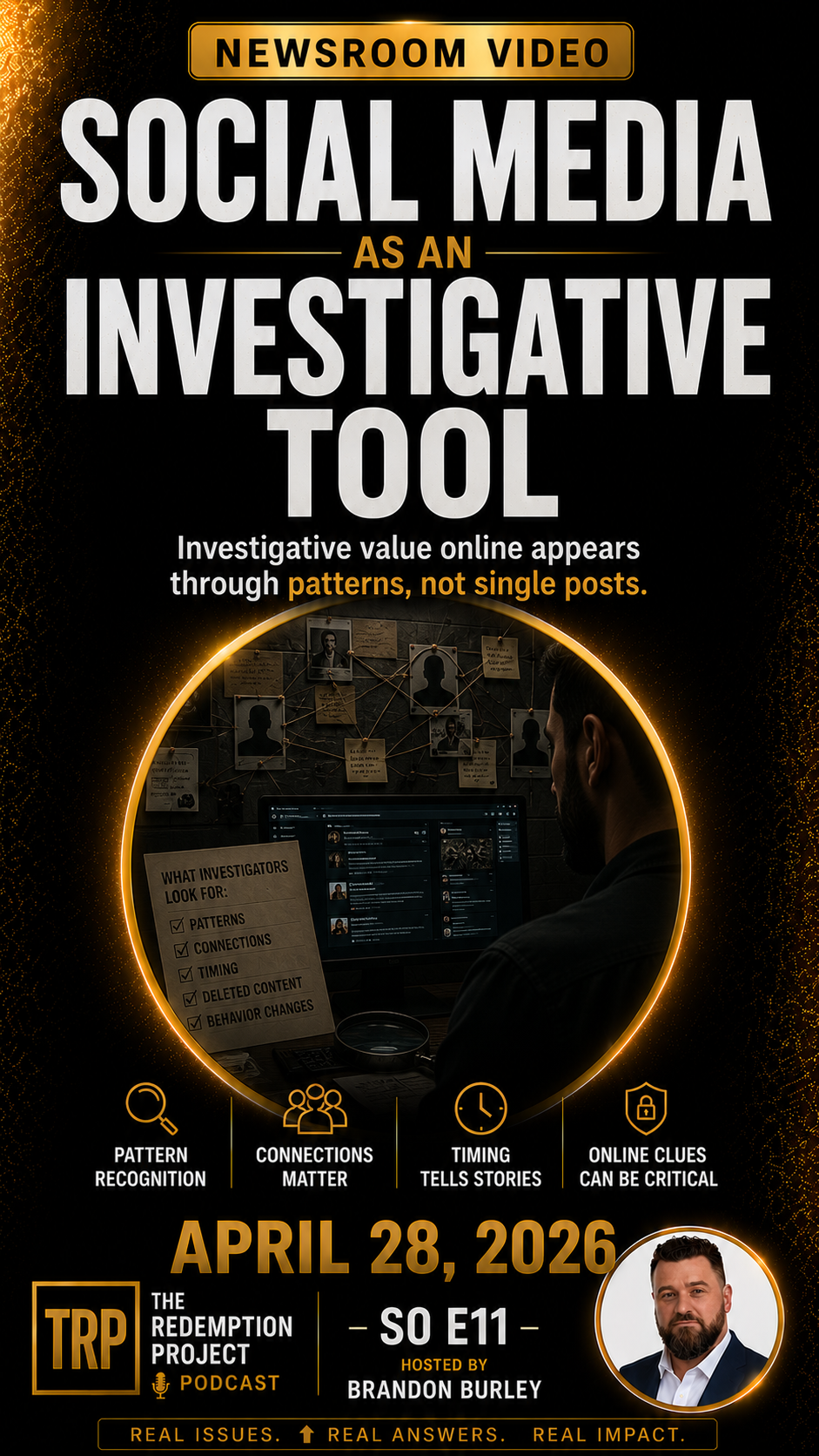
by Brandon Burley and The Redemption Project Investigative value online usually appears through patterns, not single posts. Repeated names, reaction behavior, deleted material, and timing often matter more than people realize. I am a retired detective and criminal justice / government educator based in Tennessee. I am a commentary write for Tennessee Lookout and a weekly columnist with Knox TN Today . My work examines public policy, public safety systems and civic responsibility. My reporting and commentary have also appeared in Governing , The Arizona Capitol Times , South Florida Sun Sentinel , Police1 , among other state and regional outlets. Get full access to The Redemption Project Newsroom at newsroom.theredemptionproject.news/subscribe

Social media as an investigative tool

Playback continues in the player bar at the bottom of the screen.
Related Episodes

Why New Opioids Stay Hidden

TRP Newsroom / Main Feed

Why New Opioids Stay Hidden

by Brandon Burley and The Redemption Project A newly emerging synthetic opioid identified in Tennessee, Canada, and parts of Europe is highlighting a larger forensic challenge: surveillance systems often only detect what laboratories are already built to recognize. A new synthetic opioid is now forcing a bigger question across multiple countries: how often do new drugs spread before public systems fully catch them? The compound is called cychlorphine. It has already appeared in overdose investigations, forensic laboratories, and seized drug supplies in places including Tennessee, Canada, and parts of Europe. In Tennessee, forensic officials have linked it to multiple deaths under investigation, and the drug has been described as roughly ten times more potent than fentanyl. But the larger issue is not just the drug itself. Many overdose dashboards only show what laboratories are already built to detect. If a new compound is not part of routine testing, it can circulate long before official numbers fully reflect what is happening. That means chemistry can move faster than surveillance. Across multiple jurisdictions, cychlorphine has already shown how differently detection systems move depending on forensic design. In Canada, federal laboratory systems identified the compound and incorporated it into routine screening after validation through Health Canada’s Drug Analysis Service. In parts of Europe, early warning systems allowed laboratories to report detections before mortality data fully reflected the substance. In the United States, forensic identification often depends on state and regional laboratory workflows, which means detection can vary by jurisdiction even when seized drug material appears elsewhere. That creates a practical gap. A compound may already exist inside supply chains while public dashboards remain largely silent. Forensic laboratories often see chemical change first. Public systems usually catch up later. As synthetic opioid chemistry continues evolving, the central question is no longer only how dangerous a new compound may be, but how quickly institutions designed for detection can recognize what has changed. In that environment, surveillance is no longer only a reporting function. It is part of public health readiness. I am a retired detective and criminal justice / government educator based in Tennessee. I am a commentary write for Tennessee Lookout and a weekly columnist with Knox TN Today . My work examines public policy, public safety systems and civic responsibility. My reporting and commentary have also appeared in Governing , The Arizona Capitol Times , South Florida Sun Sentinel , Police1 , among other state and regional outlets. Get full access to The Redemption Project Newsroom at newsroom.theredemptionproject.news/subscribe

S0 E2
54
Open episodeWatch
Also available on
  • Substack
  • YouTube
  • Apple Podcasts(Coming soon)
  • Spotify(Coming soon)
  • iHeartRadio(Coming soon)
  • Amazon Music(Coming soon)
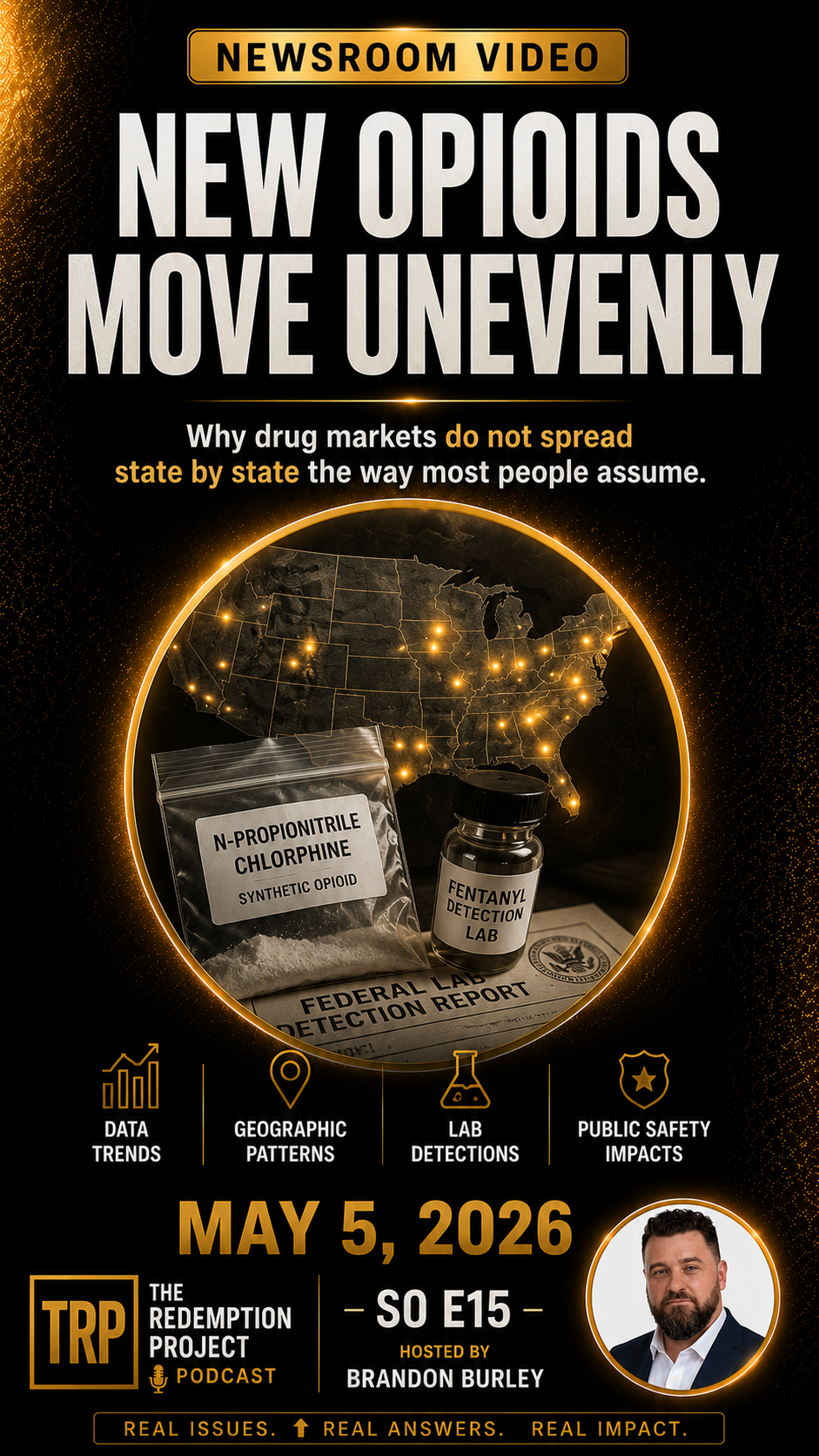
New Opioids Move Unevenly

TRP Newsroom / Main Feed

New Opioids Move Unevenly

by Brandon Burley and The Redemption Project Federal detections of a new synthetic opioid show why drug markets do not spread state by state the way most people assume. Federal laboratory detections of a new synthetic opioid known as N-propionitrile chlorphine are raising broader questions about how emerging drug compounds move through U.S. supply networks. The compound was first confirmed by a DEA laboratory in 2024, with later detections reported in states including Texas, California, Illinois, Missouri, and Tennessee. New Mexico reports no confirmed identifications to date. State officials say the compound has not been detected in seized materials there, but that existing laboratory workflows would be capable of identifying it if it appeared. Forensic experts note that synthetic opioids do not spread state by state in a predictable pattern. They move through trafficking networks, wholesale relationships, and supply hubs, often appearing in one region while remaining absent in nearby states. That means the more important question is not whether a compound has reached a state yet. It is whether surveillance systems are prepared to recognize it when it does. Drug markets often follow relationships, logistics, and supply chains rather than geography. A compound may surface repeatedly in one region while remaining absent nearby for months or longer. That is why laboratory readiness often matters more than assumptions based on maps. I am a retired detective and criminal justice / government educator based in Tennessee. I am a commentary write for Tennessee Lookout and a weekly columnist with Knox TN Today . My work examines public policy, public safety systems and civic responsibility. My reporting and commentary have also appeared in Governing , The Arizona Capitol Times , South Florida Sun Sentinel , Police1 , among other state and regional outlets. Get full access to The Redemption Project Newsroom at newsroom.theredemptionproject.news/subscribe

S0 E15
64
Open episodeWatch
Also available on
  • Substack
  • YouTube
  • Apple Podcasts(Coming soon)
  • Spotify(Coming soon)
  • iHeartRadio(Coming soon)
  • Amazon Music(Coming soon)
Police Officers carry the weight of a call, long after it ends

TRP Newsroom / Main Feed

Police Officers carry the weight of a call, long after it ends

by Brandon Burley and The Redemption Project A call may close operationally and still remain mentally active much longer than people realize. That is part of why officer wellness is often misunderstood: many burdens do not appear when the report is written. I am a retired detective and criminal justice / government educator based in Tennessee. I am a commentary write for Tennessee Lookout and a weekly columnist with Knox TN Today . My work examines public policy, public safety systems and civic responsibility. My reporting and commentary have also appeared in Governing , The Arizona Capitol Times , South Florida Sun Sentinel , Police1 , among other state and regional outlets. Get full access to The Redemption Project Newsroom at newsroom.theredemptionproject.news/subscribe

S0 E14
44
Open episodeWatch
Also available on
  • Substack
  • YouTube
  • Apple Podcasts(Coming soon)
  • Spotify(Coming soon)
  • iHeartRadio(Coming soon)
  • Amazon Music(Coming soon)